I first met Lina when I was working for Concordia University in Montreal. I was tasked with the daunting challenge of aiding in the decolonization and diversification of their film catalogue. Throughout my residency year, I went through hundreds of Colombian films in an effort to paint an all-encompassing picture of the diaspora. Almost like a gift from above, I saw Lina’s 2022 documentary feature Mis Dos Voces. Everything that I was struggling to find was present in her movie, and not just because I was looking for films for work. Lina’s film struck a chord that I had hidden deep inside my heart, as a defence mechanism perhaps. Mis Dos Voces truly impacted my life and touched me beyond its 70-minute runtime. Getting in touch with her after such an experience was the easiest decision of my life. Ever since, I have admired Lina’s work, her formal tenderness, the poetry she finds in images, and her attitude towards filmmaking as a whole. So it could be said this interview was a long time in the making, ever since that fall afternoon in 2022.
Lina’s latest project, and reason behind this interview, Puntos De Fuga (Vanishing Points) premiered during the 54th edition of the Festival du Nouveau Cinema in Montreal. Navigating between Colombia and Canada, her and her mother’s memories, Puntos de Fuga is both an autobiography and a self-reflective essay on the endurance and perseverance of images. Collective and subjective at the same time, Lina manages to retell intimate experiences with overarching historical milestones, waltzing in and out from the imagined to the real.
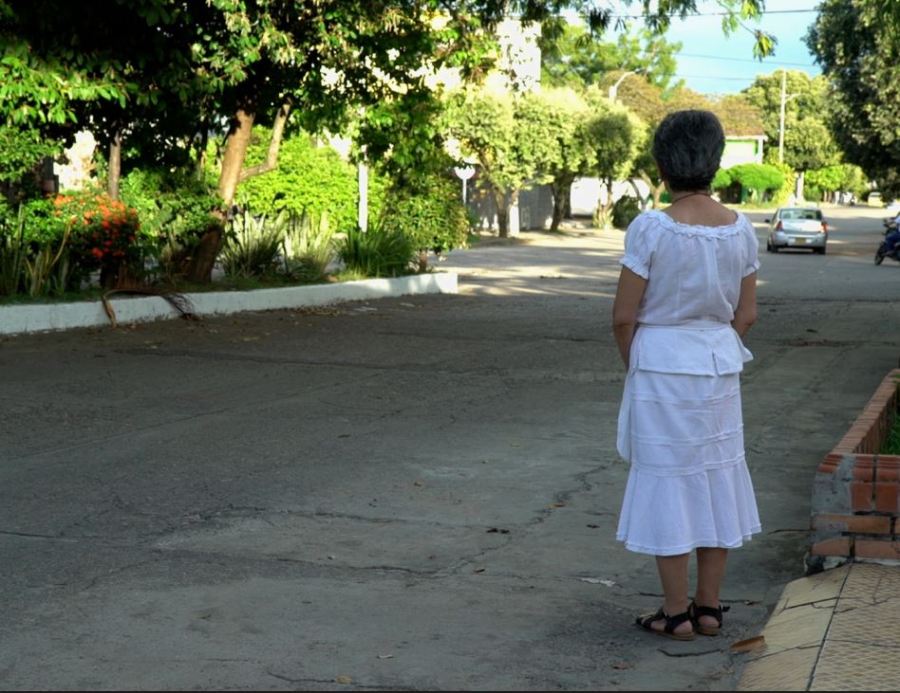
In short, Puntos de Fuga is a film that is experienced. Its multitude of textures, its soundscapes, and the punctuality of its scenes are a lively tableau vivant filled with beauty and love.
Juan: You’ve said in the past that documentary filmmaking is not particularly your background. Why did you choose to return to documentary?
Lina: It is interesting because when I finished film school, my first films were all documentaries. They were experimental shorts, documenting time, space, light, movement, and texture. This has always been something that interests me. I don’t feel that documentary filmmaking is completely divorced from fiction. In film, whether it is fiction or non-fiction, we are dealing with time and space, so in a way, it is always an act of documenting. Even within a script, a line of dialogue or a scene, we are always dealing with the fact that we are recording a specific time and space fixed in a frame. It is true that [cinematic] form changes, but I’m more interested in how I can document, how I can tell or retell. What is the story of my life? What is my mother’s? How are they intertwined with Colombia and the impossibility of it all? In the end, all of this also ends up in fiction.
J: What about the creative process? Do you feel it is the same with fiction as it is in a documentary?
L: The process is different for sure. I think with a fiction movie, you have to start with a narrative structure and work on your script. The script will be that document you will use to explain your idea to others, for grants, for example. That’s what scripts are at the end of the day, they are a map to begin a search. Now, for documentaries, especially Puntos de Fuga, I wanted to make a movie with my mom because it was part of an emotional process. We shared so much on my journey through cinema. Previously, I had made a short film with my dad about his family. I thought it would be nice to complete the family constellation with a movie about my mom. I desired to explore how close and far we are, she in Colombia, I in Canada. I also wanted to connect this to my immigration experience, as I did with So Much Tenderness and Mis Dos Voces. It wasn’t a fully conscious decision, but it all stemmed from my desire to make a film with my mom. After that, when we wrote the project down, we had the chance to apply and receive funding from the Arts Council of Canada, Ontario, and Toronto. It is the first time we have received funding from all three of them!
It all boiled down to me trying to write this deep desire I had while not adhering to what I wrote down. I’m more interested in going beyond what I write down in a script or a grant application. I didn’t want to follow a predetermined idea. From that moment on, I began to think about how my mom and I could share each other’s voices, to tell us and to each other. I thought of two formats, Super 8 film and Hi-8. I thought about this sort of road movie where my mom would revisit places that were important to her. With all this in mind, I began writing down all of these intertwining stories, perspectives and formats, trying to decentralize the narrative of the story. I found the how, the why, the when, and the who, which is what we need to determine in the script, right? This time, I just wanted to mix and complicate everything a little bit, making it hard to tell who was talking about whom and where we were at any given moment.
J: Do you feel that the interviews end up feeding the narrative, or was it all the way around? Or maybe it was the third-person intertitles you use to mark the passage of chapters through the movie?
L: Ok, let me explain to you how I envisaged the structure of the film. First, I mapped all the places we would visit. Beginning with the places that were important in my mother’s chronology, followed by Bogota and Toronto, which is where I come into the picture. From 2022 to 2023, we visited all these places and compiled a ton of images; however, we still didn’t know in which order we would show them. We never really did formal interviews with my mom; as we visited different landscapes and spaces, she would tell us stories, most of the time things that I already knew, but for me, it was an important part of the process.
For example, in the film, when we visit The Tunjo Rocks, I knew from her own stories that my mom used to go there as a child. I did too. However, when we were shooting on location, Brad told me that these rocks reminded him of Peter Weir’s Picnic at Hanging Rock, as you know, this movie follows a group of girls who get lost on a picnic. In that moment, a part of the structure materialized to me. I wrote a story around my mom watching the Tunjo Rocks with Esperancita, my late aunt who died (who also stars in other films by Lina). My mom always used to say that Esperancita was too sensible, that she cried a lot, just like me, so I began interlacing and fictionalizing our three stories and the story of the lost girls.
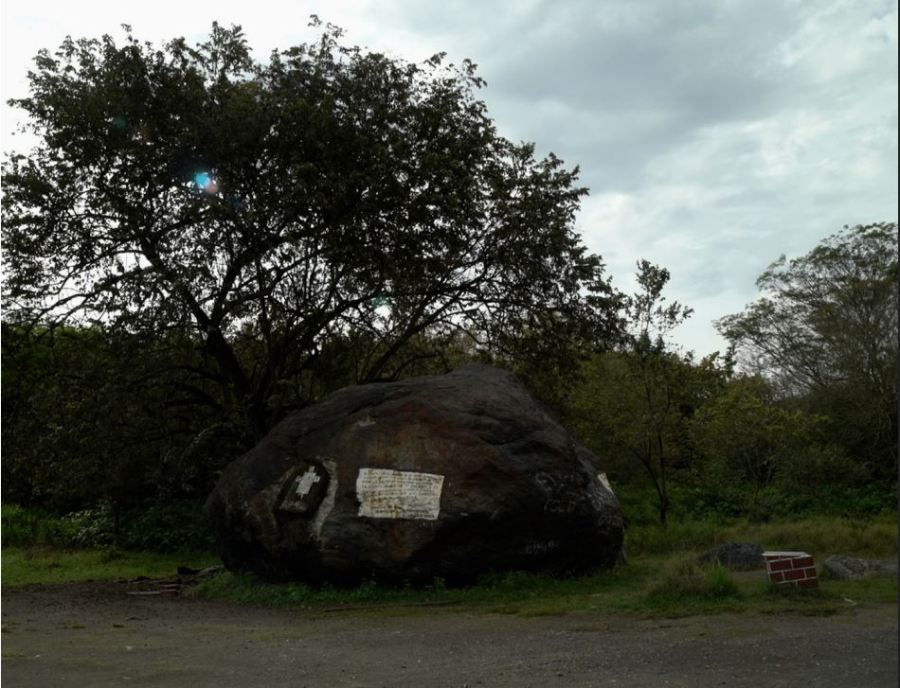
I decided to play with the notion of what is true and what is not. Just because something didn’t happen doesn’t mean it is not true, you know what I mean? Unfortunately, we come from a disappeared country, so I wanted to play with the themes of Weir’s in that particular sequence. The space occupied by which disappears. I think this has to do with immigration, with absence, with death. So, it wasn’t completely conscious to start using these themes. They came to me unintentionally. All the recurrent themes in Puntos de Fuga, like disappearance, animals, and cyclical history, weren’t really established from the get-go. I didn’t want to tell my story per se, but I wanted to search for a way to remember myself and the ecosystem I belong to, which is so much bigger than me.
The process for this documentary was like building a puzzle where I didn’t know all the pieces. I wove personal stories with elements we were discovering in each location. Also, in the editing room, the film began echoing in different directions. I added many little things that perhaps not many people will notice. We ended up building a labyrinth of memories, real and imagined… I don’t know if I’m making myself clear!
J: Yes! Was it like the film was writing and rewriting itself while you were making it?
L: Exactly! I didn’t know what the voice-over would be. I didn’t know that I was going to separate the film into chapters… All of that occurred when I was editing the film. Perhaps in a way influenced by Marguerite Duras. In both her films and her literature, she is a history-teller, focusing on the fragile notions of who retells an event and why. I never wanted my film to tell an “official history”. I desired to confuse and fuse myself with my mother.
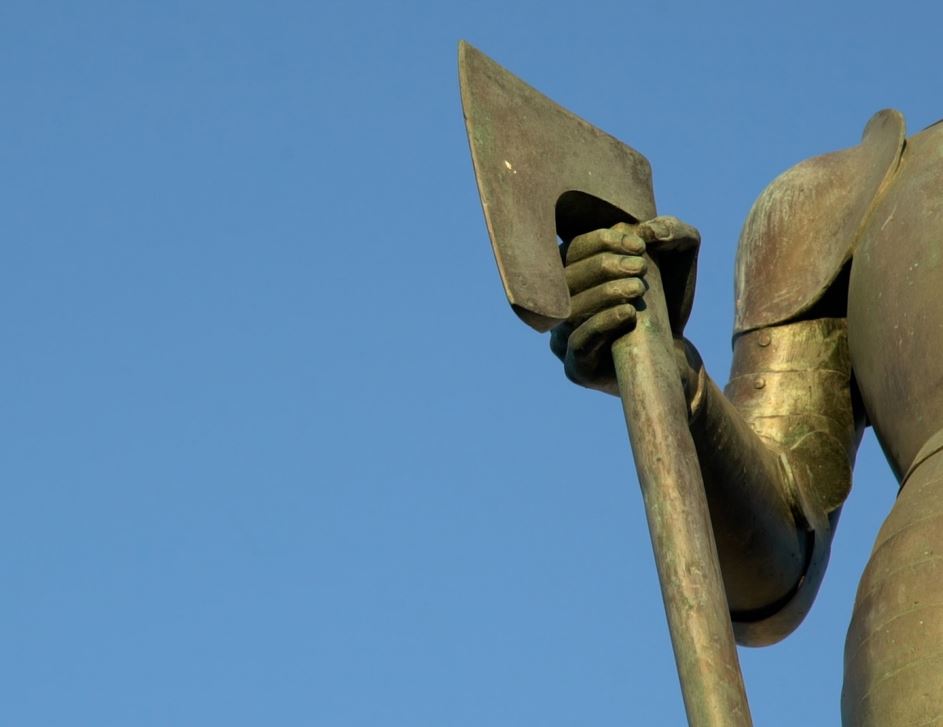
It was also in the editing room that I began writing the intertitles. I was familiar with this tool as I used it in previous projects. In the past, I was embarrassed by my voice, so I found that using intertitles was a good compromise to keep myself outside of my films. They became a way of being present without really being in the film. In Puntos de Fuga, the intertitles came to me in Riohacha, when we were recording the Nikolaus Federmann statue. It is still so bizarre to see who we choose to pay homage to in our [Colombian] history. Allegedly, Federmann was the founder of the city, but even this is a point of contention amongst historians, as I later researched. This reminded me of how complex history is. It changes depending on who is telling it. As we know, the official accounts are told by the people in power, so I wanted to give a nod to the multiplicity of shades and perspectives that exist in history. The intertitles then became that third voice, not necessarily contradicting what my mom or I say, but a conscious voice that addresses the audience.
J: In this film, you focus on the self-referential mechanics behind storytelling. Why was this a point of interest for your process?
L: I wanted to use history and stories as language tools, continuously digressing and interrupting themselves. By interrupting the narrative flow of the film, we are recognizing and uncovering the act of being present and watching the film. Once we feel that tangible presence, we see the intention of the structure developing in front of us. The film itself calls attention to the intervals and the digression, like that scene where my mom is singing a church hymn…
J: I really wanted to talk to you about that scene! I was raised in a catholic school, so the song that your mom is singing is a crucial part of my childhood!
L: That’s so interesting! I find it so beautiful that many people have approached me to say they know that song. I never heard it before, but it seems to be a huge part of the Colombian collective memory. Even if my mom didn’t sing it correctly, she kept forgetting the lyrics. That scene is a very special gift the film keeps giving us.
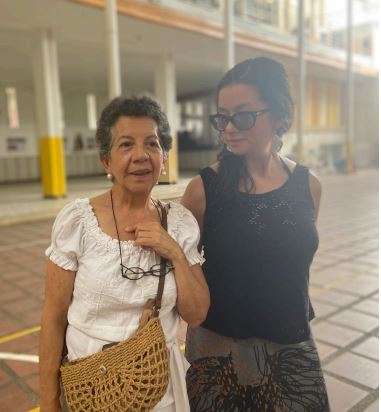
L: So my mom and I spent all this time hunting down places that fit. It wasn’t just a mental exercise; it was physical, almost like a bodily reenactment of returning to a place. Thinking about a place through old photos is completely different from actually standing there to see what memories resurface. That was the whole dynamic with my mom. It was a memory exercise, asking her, “What do you remember?”
It happened constantly. That’s exactly why I wasn’t interested in telling a neat, fully objective or ‘true’ story, because that’s impossible anyway. Maybe some documentaries aim for that, and I don’t judge it, but I have no interest in capturing ‘how things really were. Besides, Colombia’s history is full of fragile, painful, yet deeply moving moments that stay with you. This project wasn’t meant to package seventy years of Colombian history alongside my mother’s life.
I had tried to explain it to her earlier, saying, “Mom, it’s an essay film.” She asked, “What’s that?” I found Chris Marker’s Sans Soleil online and told her, “Look at this movie; this is an essay film.” After she watched it, I asked, “What did you think?” She said, “It’s beautiful, but I don’t want our movie to be like that.” I asked, “Why not, Mom?” and she replied, “I don’t know, it feels very philosophical… very pretty, but a bit cold.”
I thought, Okay, that’s a masterpiece, but I get where she’s coming from. I explained, “Mom, an essay film is like the branches of a tree. It branches out in different directions to touch upon a central root, but everything happens in parallel. And sometimes one branch splits into three more.” She said, “Okay, I get it.”
So, even though we were exploring this idea of an essay film, my goal was never to give a strict, factual account of her life.
Take Facatativá, for instance. When we were shooting there, my mom recalled being very young. We arrived at the main square, and she was looking around, saying, “I think we lived right near the square.” She saw a man selling lottery tickets and asked, “Excuse me, sir, do you remember if Manolo’s Pharmacy used to be right here?” And he goes, “Ah, yes, it was right over there!”
Then she pointed out a house: “Look, that’s the house!” We started filming it. A tailor working across the street mentioned, “The owners of that house actually just walked in. Go ahead and knock.” So we went over, and my mom knocked on the door. She said: “Hello! My daughter is making a documentary about my life.” She kept framing it that way. She told the lady at the house, “She’s making a movie about me, and I used to live in this house. My mother ran a clothing store here called Caperucita Roja.”
The lady looked at her and said, “That’s impossible, ma’am. I’ve lived here for sixty years, and your mother never had a shop here.” My mom was stunned. “Oh…” She thanked her, turned around, closed the gate, and whispered to me, “Oh no, I feel terrible!” I told her, “Mom, don’t worry about it.” She said, “I was so sure it was here… Where could it have been?”
In the end, we didn’t get the house for the film. But that wasn’t the point anyway. It was an exercise in memory, going back to Facatativá to feel this strange, almost absurd presence, and finding a way to remap the town through scattered fragments that somehow blend into one.
J: Right, so the act of remembering actually constructs the memory itself. Memory doesn’t exist unless you actively engage with it. If you don’t recall something, the memory dies; if you do, you bring it back to life, though it’s never quite the same each time you recall it.
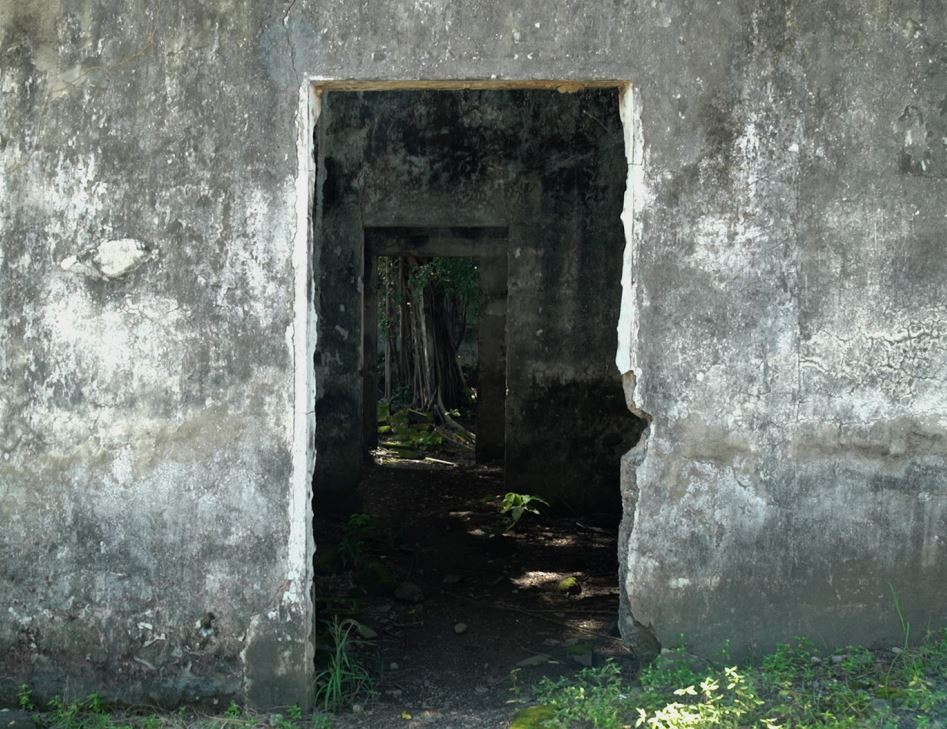
L: Exactly, it takes on a different form, like the scene in the film about the apartment where I talk about having a recurring dream. I have this persistent dream about that apartment, specifically the kitchen, where a pressure cooker exploded on my mom. It exploded while she was cooking chickpeas.
I’m not saying that’s absolute factual truth, like Truth vs. Real. But I remember the sensation; we thought a bomb had gone off! It’s about reconstructing an atmosphere where memory lives, survives, and resurfaces.
J: I find what you’re saying about truth fascinating. To me, any act of filmmaking moves away from absolute truth because it becomes the filmmaker’s personal truth. Over the last 25 or 30 years, there’s this belief that documentaries represent an objective, universal truth. But a documentary can actually be far more subjective than a fiction film. People hear the word “documentary” and instantly assume everything they see is true…
Going back to Sans Soleil, Marker uses letters from a fictional traveller, but really it’s just him reflecting on his own worldview. Your film operates in a similar space. Anyone watching who doesn’t know your life story will take those vignettes at face value, assuming they’re real; and there’s nothing wrong with that. Whether something is “real” or “objective” isn’t the point. Whether the stories about Armero or Tirofijo with Jorge Villamizar are 100% factual doesn’t matter. They become real because they exist within the film.
L: Exactly. And it’s interesting because, though I don’t know if this comes through, since the film feels so dense… There was this story my mom told me in Neiva about a woman named Casilda that I had never heard before.
She started telling me about this woman who loved animals, how she wept when her pets died, and how her son had been killed… It showed how we construct collective history. I wondered if this was a well-known local story in Neiva. I searched online and found a local Facebook group where people were debating it; a real point of contention!. Some said, “No, that’s not how it happened.” Then there was an interview with an ice cream vendor in the park who claimed the woman had a completely different name.
I realized: Here’s one narrative, and right next to it is a counter-narrative. I decided to place them side by side. It’s like how we were taught in school that Nikolaus Federmann founded Riohacha, ignoring the Indigenous communities who lived there for centuries before Colombia or Venezuela ever existed. Which history do we tell and retell? Where are the boundaries?
It’s the same when my mom says, “My father drank heavily,” and then backtracks, saying, “Well, it wasn’t just drinking for the sake of drinking…” She’s actively negotiating how she wants to remember her father and present his image. I wanted to respect that process. When she corrects herself on camera, I thought, Let’s leave that in. Let’s show her saying, “No, wait, it wasn’t like that.”
J: Yeah, exactly. Everything in a documentary is, in a sense, a performance. It’s an act of curated self-presentation; how someone wishes to be perceived. But at the end of the day, it’s still a truth: their truth, your truth, or my truth.
L: Right, there’s always an underlying intention. But I also believe the body acts as an archive that absorbs everything. Humans tend to think we control every narrative, putting ourselves at the center of the universe as the main characters of our lives, which is true to an extent. But when you position your existence alongside that of a tree or an animal, you realize we’re just trying to grasp that we aren’t the center of everything. We struggle with that concept.
You narrate your life from your personal viewpoint, but your surroundings are a shared ecosystem that existed long before you and will persist long after you’re gone.
Our bodies carry stories because they come from generations before us. We carry fragments of the past that shape who we are. Watching my documentary, seeing my mom standing in Riohacha, felt like a regression; her body physically returning to those spaces.
Same with me: returning to that apartment in Bogotá from my recurring dream; the last home I had before moving to Canada. We sold it, and I thought I’d never step foot in it again. But through this film, I was able to re-enter a space that no longer belongs to me and reflect on that period. A new family lives there now, but everything we experienced in that space remains a part of it. Spaces and bodies are living archives of stories that extend far beyond us.
J: That’s so true, and quite profound. Picking up on what you said about collective ecosystems and shared experiences: your last three films heavily feature themes of memory and the diaspora. As a filmmaker, artist, or individual, do you feel a sense of pressure or responsibility tackling these topics?
Specifically thinking about what we discussed recently: how Canadian cinema rarely highlights work like yours. Until I saw So Much Tenderness, I had never seen a Canadian film that resonated so directly with my own experiences of anxiety, memory, and identity.
Do you feel that weight of responsibility? Or, on the flip side, does being in a space detached from that cultural and historical baggage grant you more artistic freedom to express yourself authentically?
L: It’s a strange dynamic. My early experimental shorts were shot in Colombia with support from the Arts Council. But I felt like an imposter. I kept thinking, I’m going back to Colombia to shoot, but I don’t live there anymore. If I’m making films about Bogotá when I no longer live there, won’t people call me out?
Then Brad’s father asked me one day, “Why don’t you make films in Canada? You’re Canadian, aren’t you?”
Leaving your home country, or simply navigating life over time, makes it hard to process things in real time. It’s like being on a ship: from afar, you can see the vessel moving from point A to point B, but when you’re standing on the deck, it’s hard to gauge your speed or exact direction.
For me, cinema is a space to reconnect with subconscious feelings. In hindsight, maybe I should have explored my immigration journey earlier when I first arrived in Canada and felt completely out of place. Instead, I channelled that feeling of displacement by making films back in Colombia.
I don’t feel a self-imposed duty to speak on immigration or the diaspora just for the sake of it; it simply emerged when the timing was right. As my parents age and I grow older, having lived in Canada for twenty years while still feeling this push-and-pull of displacement… you start noticing the compounding losses and gains over time.
Migration isn’t a one-time event where you arrive, and that’s it; it’s an ongoing evolution of absences and presences. And this isn’t unique to me. Think of all the families living apart, parents in Colombia with children abroad, finding new ways to redefine family structures. It’s a deeply personal topic, but I don’t approach it as activist representation.
I just want to offer a space to explore these realities. In So Much Tenderness, during the scene where Lucy chats with her friend in seamless Spanglish, filming that felt amazing. It was empowering to see those characters take center stage rather than being relegated to side characters, speaking naturally in Spanglish. It felt necessary, not because I’m trying to single-handedly reform representation, but because we need diverse depictions of diaspora life so we can recognize ourselves and feel less isolated.
J: Exactly. It comes down to self-reflection, almost in a Lacanian sense. You don’t fully grasp your presence in a space until you see yourself reflected in it.
What do Canadian audiences expect from a film about the Colombian diaspora? If it doesn’t fit neat tropes about trauma or violence, like how we discussed Barrio Triste in Toronto. What do local audiences actually want from an artist with a different background? Do they want their preconditions validated, or something entirely original?
L: I’m curious to see how the film will be received in Colombia. Our societies are so polarized; people immediately label things as left- or right-wing, questioning why you included references to the M-19 movement and left out other details. But the film isn’t trying to be a political treatise. It’s an inquiry into identity: Who am I?
Going back to the mirror metaphor, humans don’t innately recognize themselves in reflections; we mirror adults and learn to accept that image as “us.” But who are you, really?
Since we are conditioned politically and emotionally to accept singular historical narratives, one of the greatest gifts of emigration, despite the pain, is the constant cycle of learning and unlearning.
I try to approach both life and filmmaking with humility, accepting that I don’t have all the answers. This film doesn’t pretend to cover seventy years of Colombian history, and I hope audiences accept it as a fragmented piece rather than an official record. Some might feel unrepresented or even annoyed, but I’ve never cared for the classic documentary trope of “giving voice to the voiceless” or providing an absolute truth. My responsibility is simply to be as honest as possible about what interests me.
J: That’s a crucial point. If someone watches a documentary and feels unrepresented, that’s valuable too. It gives them a counterpoint to say, “That’s not my story,” which sparks the process of figuring out what their story is. Before 2019 or 2020, whenever I felt unrepresented in Colombian cinema, it forced me to define my own voice, both artistically and personally. I’d almost prefer people to say, “I hated that movie,” because at least it triggers a meaningful conversation.
L: Yes! That’s a unique perspective the diaspora offers. Distance gives you clarity to realize that a culture shapes you, but doesn’t fully define you. When you live abroad, you exist in duality: I’m Colombian, but not entirely; I’m Canadian, but not entirely. You inhabit multiple realities simultaneously without one negating the other.
J: Definitely. You can’t grasp that multiplicity until you physically experience it. Realizing you can exist across multiple planes at once. It takes constant effort to learn and unlearn, but it’s liberating. That’s my biggest takeaway from migrating: realizing I can exist here and there simultaneously, even if the person I am here differs from who I am back home.
L: And your body carries that archive too. It tells a story. It’s a single body holding multiple lived experiences.
J: For sure. Take my tattoos, for example: my entire left sleeve was done in Colombia, while my right sleeve was done here in Canada. When I went back to Colombia, I looked at myself and thought, Wow, identity literally scars itself into your skin. It’s a bold example, but…
L: No, it makes total sense. It was an impulse to mark a specific moment in time on your body.