

Winner of the Best Feature-length film, awarded by the Festival du Nouveau Cinema’s FIPRESCI jury.
The bittersweetness of growing up has been at the center of many films, yet it has never been as prominent as in Ernesto Martínez Bucio’s first feature, El Diablo Fuma (Y guarda las cabezas de los cerillos) (The Devil Smokes and saves the burnt matches in the same box). Centred on the story of five children as they deal with their absent parents and their schizophrenic grandmother, The Devil Smokes offers us a tender but harrowing look at how many of the things we fear are reflections of our elders and our environment. The director composes a rich tapestry of family relations through subjective storytelling and a keen eye for detail that is both moving and commendable. Ernesto puts the audience right in the midst of complex situations where both the viewer and the characters are fighting to discern fact from fantasy. And that is not the only driving force of the movie; Ernesto also offers us several moments in which he manipulates the image and lets us know that we are traversing more of a memory rather than a conventional retelling of a story. Powered by awe-inspiring performances from its young cast, The Devil Smokes is a poignant reflection on childhood, pondering the power words have on our imagination whilst highlighting the importance of love and care.
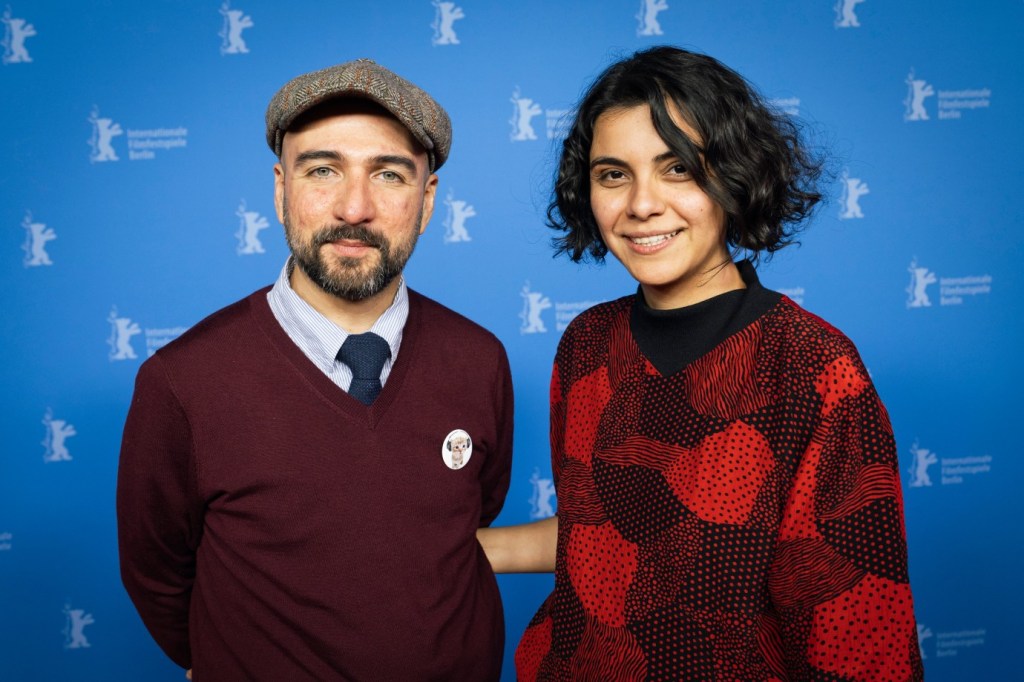
I had the chance to interview Ernesto during the Festival du Nouveau Cinema in Montreal. Here is how our conversation went:
Juan: Your movie has a very striking name. How does it come to be? How does the movie come to life?
Ernesto: To understand the name, I have to explain a bit how Karen and I write. We don’t write linearly; we write in parallel, with parallel exercises. Karen comes from poetry. She won the Elías Nandino Prize in 2015 in Mexico. While we were writing the script, I found one of her poems, and it had this verse: “The devil smokes and keeps the heads of burned matches in the same box.” And I liked it in a very intuitive way. It had nothing to do with the film at that moment, and I told her, “Hey, I think we could use this as the title of the film.” I think it was one of the best decisions I made, and it was out of intuition.
When I asked her why she had written that verse in the poem, she told me that she had gone to her great-grandmother’s house after she had died. In her family, when someone dies, the houses remain like sanctuaries. Nobody touches anything. When she started going through the drawers, she found these little mathboxes, which appeared full, so she took them with her. When she got home, she opened them and realized they were full of the little burnt heads. She also remembered how her great-grandmother used to say that she saw the devil as balls of fire that came close to the windows. That’s where the devil began to get into the film and ended up rounding everything out. It modified the narrative and those images that will end up in the film…The devil’s hand truly entered the film.
The rest of the film comes from personal anecdotes, both Karen’s and mine. We based the characters on people we know, family, and friends. Two of the children’s temperaments are based on a pair of twins we met when they were very little, and whom we liked very much. However, this all changed once we cast the actors. We let their personalities come in; we modified the script, among other things, but yes, the film comes from personal anecdotes and from an exploration of memory and of one’s own childhood.
J: How did you develop the work with the children in terms of acting? How did you manage to feed from their personalities?
E: The first thing was the casting, by the hand of the casting director, Michelle Betancourt, who was also the acting coach. We assembled these five children, and it was like Wow! The work really well together. Then we started getting to work with them, because only one of them had acting experience. The other four didn’t have any. We did a workshop of about two months, where we rehearsed. In these rehearsals, we went through parts of the script, but at some point, I felt the way they were saying their lines sounded stiff. So we changed the strategy and began to build relationships among them.
Once we had the relationships among them, it was very easy to access deep emotional places and for them to get along naturally. Because they already knew each other very well, we also let their personalities sort of pass into the characters.
There’s a very specific anecdote about the girl who plays Marisol, Regina Alejandra. When we did the hair tests, in the script, it said she wore a ponytail. She had her hair tied up all the time, and Regina looked super uncomfortable; she didn’t feel at ease. I asked her if she liked having her hair combed like that, and immediately she said no. So she wore her hair loose throughout the film. We didn’t want to force them to be like the characters were written, but let the children also use their personality in the construction of them.
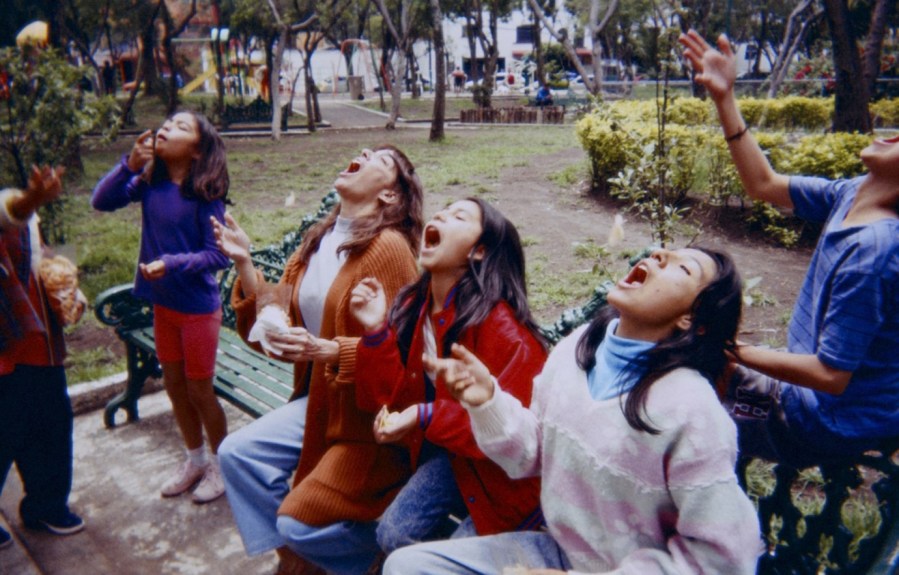
J: You can really see that relationship on screen. Like when the two older children banter among themselves. How much of it was improvisation and how much was written?
E: That moment I remember perfectly because it was a line that I wrote. I wanted to put some of my humour, which is a bit darker, although I share it with Karen. There is this game in which all the time he is telling her that she is fat, and obviously, the girl is not fat. It is part of the evolution of the relationship between those two characters. This evolution wasn’t written per se, but they already got along so well that they could do that, and curiously, they could act that rough among themselves. There are many things like that which seem improvised and are written, and there are others that are indeed improvisations. I mean, we did not always use the same strategy on the set. Also, it is important to note that the set was free of gear and dressed with the art, props, production, and set design, all in 360 degrees. The kids could move everywhere. The light always came from outside. Odei Zabaleta, the photographer, designed a lighting strategy with a cage from outside the house, where he hung fabrics and where he could filter the light from the outside. And that was fundamental to shoot fast, to illuminate fast and change the direction of the light when necessary, but also to have the set free of things so that the children could move freely. All the technical things needed to be at the service of the children’s acting and not the children at the service of the technical things, right? There were no marks on the floor; they didn’t have to reach a certain point. We knew we would have slight out-of-focus moments, but that was also part of the aesthetic decisions that I mentioned.
J: This does give the film a very naturalistic style, almost like mixing fiction and documentary. How hard was the camerawork in this movie?
E: Look, Odei is a very good camera operator, and he also designed a rig to put the camera at the children’s height. I wanted a camera that felt handheld, but that wasn’t so unstable, and also I wanted to use longer lenses. I had to lower the camera height to the children’s eye level, and he designed it with a horizon stabilizer and an easy rig that hung the camera. That decision we took since preproduction, we knew the film needed that vibration when you feel the photographer’s hand. Showing that the camera is alive.
J: Now, in more formal terms. When did you decide to use a Hi-8 video camera? Did the children become camera operators? Why did you use the rewind?
E: I’m glad you asked about that because I really like the rewind element, eh?! Ok, first, the camcroder. In one version of the script, it was introduced in a scene that is no longer in the film, but once it was in, it never left. We really liked it because the texture of the image immediately evokes a certain era, and curiously enough, this very rough and coarse texture reflects the family’s most luminous moments. I found these contrasts very interesting. We chose to let the children operate the camera also during the script, but we also modified the camera. We tested a lot of handy-cams and went with the one that had the roughest look. Also, we couldn’t just leave the camera rolling and see what it filmed. We had to monitor what the children were shooting. Udai put a video transmitter on it with the battery on top, but then the camera became a bit heavy. Some children couldn’t operate it on their own. The younger ones, for example, couldn’t hold it for very long on their own, so we helped them a little. Someone would stand behind them and help them. But we decided to let them operate it because we realized that if we operated it ourselves, trying to act like children, we couldn’t get the framing right, and it would be a little shaky, but our training made us frame what looks good, what is conventionally cinematic. So we decided to let the children use it as much as possible, and in the credits, the children appear as B-camera operators.
Then the rewind of that camera is very important to me. It’s essential because for me it’s very, very important to reveal the mechanism. It’s my way of being honest with the viewer, of reminding them that the image is manipulated. On the other hand, this obvious manipulation raises another question: Who is manipulating the material? And there, it is up to the viewer to decide whether the person manipulating the material is inside the film and inside the story or outside the story. So I really liked that aspect, that it generated that doubt and that it also communicated that time is going backwards. Without the rewind, I left it like it could be understood that the mother has already returned when she hasn’t. I wanted them to know that this was a moment in the past, which is why the first rewind. But the second rewind is even more important to me because the scene runs uninterrupted until you get to a very emotional moment where the mother breaks down, then the scene stops, the image goes back and stops at a specific moment that gives a clue as to who is manipulating the image. It’s curious, because a very rational and very obvious mechanism moves me, I think, because of the handling of the element and the technical resource and the tempo in which it’s done.
J: It seems a lot of the story relies on sound. How did you approach the sound design for this movie?
E: Well, I left a lot of it to chance. We were looking for things from the 90s; it was an exercise in memory, especially looking at how and what sounded on television. While looking at things that wouldn’t cost us much, I remembered the Government Solidarity Campaigns. The campaigns would say: “All together, here in the neighbourhood, we have paved the courts.” That generated a lot of irony, no? The contrast to what was happening in the lives of these children, who precisely had issues with their neighbours. The same thing happened with the images of the Pope and his arrival in Mexico. It was never about a specific year, but an era, a time.
I started laying out all those sounds while editing. Then the sound designer started shaping it all together. Drones were really important, for example. There are very small drones, worked by José Miguel Enríquez and mixed by Carlitos Cortés, who is an Oscar winner for Sound of Metal. I didn´t want them to be like in terror, but I wanted them to climb, very low, building tension, like an air conditioner hums. We built a rarefied atmosphere without going overboard; they are almost imperceptible.
Another important thing was the bridges between objectivity and subjectivity, especially with the grandmother. We needed to convey how she feels, how she sees reality. It wasn’t through the images, but it was through the sound, again, a rarefied perception. We always said this film isn’t magic realism, it’s an altered reality, an altered realism. This came through Michel Gaztambide, the script tutor. This element helped us a lot to take the steps needed to bridge objectivity and subjectivity.
J: How does The Devil Smokes dialogue with Latin American and Mexican cultures?
E: I believe the film enters into dialogue with the world, with a child’s view of the world and with the materialization of children’s fantasies. As a child, fears are real. A shadow does scare you, and a tree branch affects you. I don’t know if we Latinos have a greater freedom to express those fears, maybe more confidence, thanks to our relationship with supernatural things…or myths. I think Europeans also have those myths; it is all attached to our origins. I don’t think I wanted to make my film very Mexican; it just happened intuitively.
When we return to our childhood memories, we return to those fears. When I was little, I was very afraid of the Devil and the dark. When I was five years old, I was so afraid to cross the hallway to go to the bathroom that I would pee in a corner behind a curtain. When my parents found out, they scolded me, and my only reaction was to tell them I was scared…It was because of them, they talked a lot about the devil and at the catholic school I attended, they always talked about it and the dark.
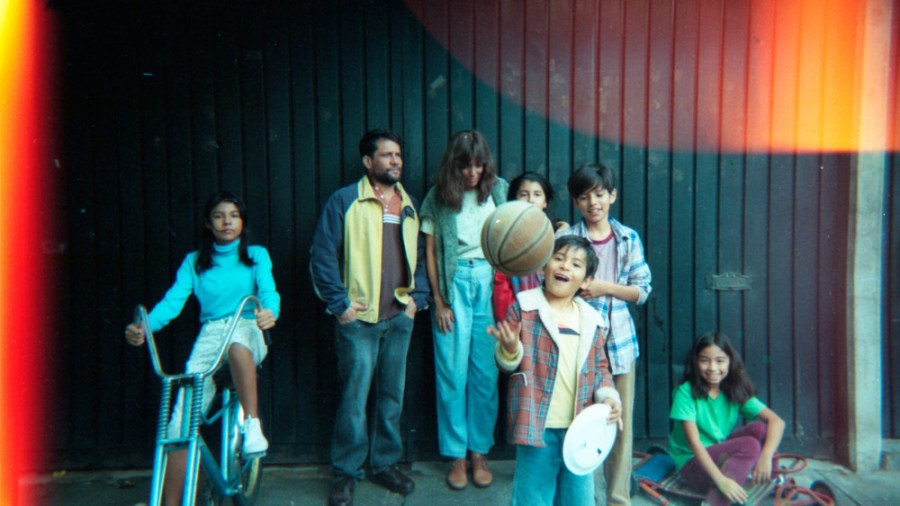
J: Were you able to explore the themes of intergenerational trauma by delving into the relationship between the grandmother and the children?
E: I believe we come from broken cultures, we come from fractures. I think you can even see that in our cities. When you look at the satellite view map of Tijuana and San Diego, the latter is perfectly laid out, and Tijuana is all fractured. I think that’s Latin America. In the United States, multiple cultures were crushed, and one was completely superimposed on the others. In Latin America, you can see the scars, the cracks, the wounds. I think that continues to permeate the culture. I think that families in Mexico (and Latin America) are built as well as they can. They sew themselves up with whatever they have at hand. They do what they can with what they have, and sometimes family members have to take on roles that they shouldn’t. It shouldn’t be a grandmother’s job to take care of five children. Or, for example, there are also cases where a daughter gets pregnant at a very young age and the baby is raised as if it were their little sibling. When they’re older, they’re told that their sister is actually their mother and that their mother is their grandmother. This comes from shame, from what society will say. This also influences a lot of our culture. I think that this connects very well with viewers because they see themselves reflected. These stories, this poem…
Four of the five children come from broken families. They live in families where their parents aren’t together or are not in conventional families. They do have familial support, which is very important in Latin America, right? This contrasts with North America, where children go to college on the other side of the country and don’t see their parents for years. In Latin America, we are very close to our families. These bonds are really strong because they sustain us. With a lack of systems in place or institutions, families and their bonds sustain people. This is how I handled it thematically with the children; they already knew what it was all about, they knew exactly how it feels. It was all very natural, as if they had already processed what we wrote.
J: How was the movie received in Mexico?
E: Ah, that was incredible! I mean, the truth is that we just presented it two days ago. In Mexico, what I asked for was for them to bring the five families, the five children with their relatives, so that all five could be there, and they managed to do it because they couldn’t be in Berlin. So it was like a closing event for us, a celebration, to be able to say: “Look what we did, right?” And it was very well received. I got very good feedback. I think it connects very well with the audience. It’s a film that seems more risky than it actually is. It’s quite conventional, but in a different way. I mean, I don’t know how to explain it…because we’re also having a hard time finding the means to distribute it… And we won the audience award in Poland. How do Poles connect with this? Well, memories are similar, and they connect. So it was very well received. Everyone is applauding the children’s performances a lot. I think that’s what stands out most about the film, not to detract from other things or other parts, but it’s like, wow!
 Short Ends