

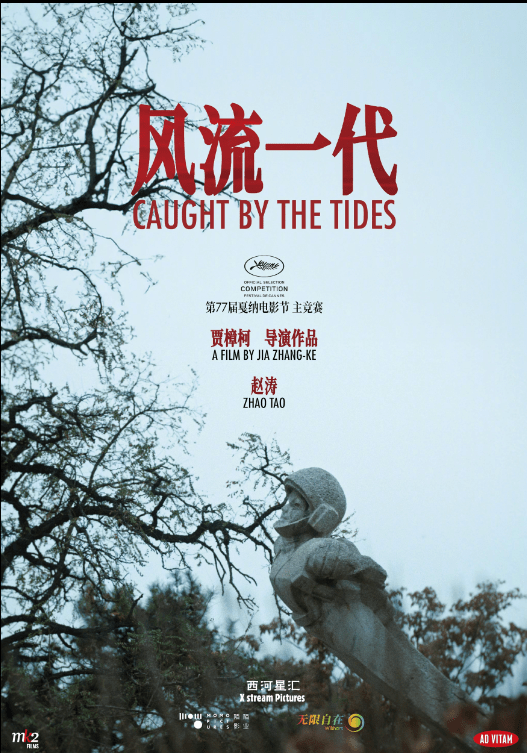
Caught by the Tides, Dir. Jia Zhangke
There is little to add to Jia Jangke’s argument as one of the most engaging filmmakers of his generation, not only in China but worldwide. However, with Caught by the Tides, he reminds us of his importance as a historian. Based once again in his home province of Shanxi in Northern China, Jia elaborates a generation-spanning fictional love story using archival material, some of it from his filmography. Although Caught by the Tides features characteristics of a fiction film (Zhao Tao is stellar as always!), the film becomes more of a portrait of Shanxi and Datong city, the geopolitical changes throughout three decades and their effect on its population. Jia delivers a tender, layered film, maybe the first ever melodramatic time capsule, tinted throughout with nostalgia and a keen love for the urban spaces that saw him develop.

I’m Not Everything I Want to Be, Dir. Klára Tasovská
Following Czechoslovakian photographer, Libuše Jarcovjáková, diaries and pictures, director Klára Tasovská pieces together a compelling documentary that takes us through the eyes of Libuše to the hectic fast-shifting years of the 60s, 70s and 80s. I’m Not Everything I Want to Be excels at showcasing a less romantic but far more realistic side of art-making in the contemporary world. Impostor syndrome, rejections, working odd jobs to finance your passion, Libuše Jarcovjáková goes through all and more in this compassionate documentary that highlights the importance of perseverance and passion.

La Piel en Primavera, Dir. Yennifer Uribe Alzate
Medellín, Colombia. A dense metropolis that dangles, defying gravity from the steep mountains of the Aburrá Valley, tall and wide, vertical and horizontal, shadowing the homonymous river that splits the city in half. Home to many and a lot. Industries, institutions. Infamous and celebrated. The city of the eternal spring. The city of science, technology and innovation. Medellín has as many facets as faces walking up its streets. The city has been immortalized time and time again on screen, perhaps more than any other city in the region, however, none like Yennifer Uribe Alzate’s La Piel En Primavera. The film focuses on Sandra, a security guard in a shopping mall, her routines and consequent liberation from them as she gets in touch with her desires and needs. Although the movie is populated with various colourful characters, Medellin, the city, and the character, drew my unabashed attention. The tones, the hues, the loud music, the street vendors, the rain in the morning after a long night of partying… La Piel en Primavera genuinely captures the spirit of a city that is so dear to my heart.

Praia Formosa, Dir. Julia de Simone
Julia de Simone’s debut feature film creates a distinctly staggering visual language of time travel throughout the afterlives of slavery. Tracing pathways and passages across bodies, generations, and lifetimes, Praia Formosa follows Mulanga Muanza, an enslaved Black woman trafficked from the fictional kingdom Kongo in the 19th century. Muanza desperately looks to escape after her sister of the Passage, Kieza, plot their freedom from under the scrutinous watch of the overseer and servitude of their mistress. In flight, Muanza shifts through the spectral echoes of the ages that uproot the remnants of the past and conjures bonding connections that seep into the matter of many timelines and futures.
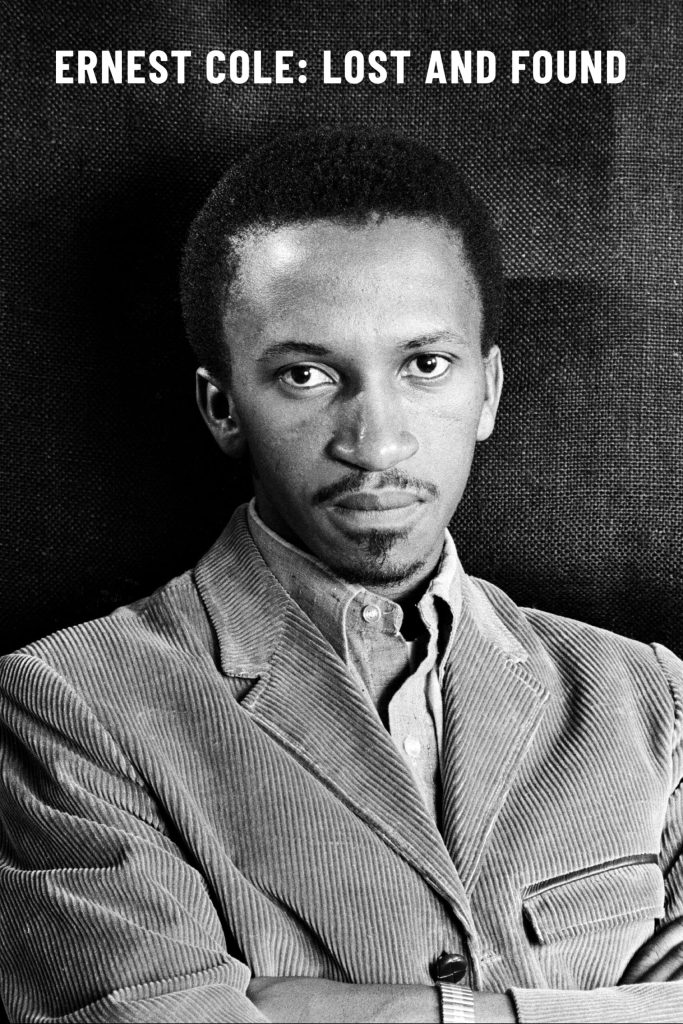
Ernest Cole: Lost & Found, Dir. Raoul Peck
Ernest Cole: Lost & Found chronicles the artist’s life beginning in 1940 and prematurely ending in 1990. Through his eyes as a photographer, Cole depicts the horrific reality of living under South Africa’s apartheid regime and, later, exiled to the United States after his eponymous work, House of Bondage (1967), was banned and his life under threat. Lakeith Stanfield’s narrative portrait of the artist gives form and substance to Cole’s reality while raising the voice of the Black South Africans living under oppression, further mobilizing the momentum of the global Black power movement towards a unified liberation. The importance of this film frames the resistance against the violence of the imperialist, colonial occupation of land, culture, and life amongst many oppressed peoples subjected to forced displacement, mass exodus, and ethnic cleansing throughout history and today in Palestine, Yemen, Iraq, Lebanon, Sudan and the Congo.

Tendaberry, Dir. Haley Elizabeth Olsen
Haley Elizabeth Olsen’s debut feature film, Tendaberry, follows Dakota in a post-pandemic New York City as the unexpected departure of her boyfriend to take care of his ill father forces her to reconstruct her entire reality. Portraying the intertwining histories in the nooks and crannies of the city and its inhabitants, Dakota navigates adulthood, love, struggle, and survival as a young Dominican-American woman. The film’s meditative poetics on life, loss, and grief depict life in parallel with how it was being lived in those small, vulnerable moments, inviting intimacy into how we tended to ourselves at our best and worst times.

All the Long Nights, Dir. Sho Miyake
All the Long Nights, Miyake’s follow-up film from And Your Bird Can Sing, shown at FNC 2019, leads us through the highs and lows of a burgeoning, platonic friendship. Burdened with extreme hormonal PMS symptoms, Fujisawa has had trouble keeping her life together as an adult. One day, she unintentionally clashes with her seemingly blasé coworker Yamazoe, who, in reality, suffers from an acute panic disorder that unexpectedly manifests a supportive environment between the two. An endearing film that asks us how we can care for those around us finds answers in the smallest gestures that mean the world when we feel as though we are suffering alone.
 Short Ends