

In the realm of independent animated productions, the Ottawa International Animation Festival (OIAF) remains a strong player in North America and an engaging and communal experience for animation lovers, almost fifty years after its inception in 1976. As a first-time attendee to whom the festival was recommended many times before, it proved to indeed be the yearly awaited meeting for animation aficionados I had heard about. From animation students, studio representatives, independent film directors to Masaaki Yuasa himself (guest of honor to the festival, no less), the festival offered an array of perspectives, storytellings and experiences with the animation medium –ultimately reflected in its varied screenings.
But if OIAF operates on a smaller scale than its counterparts and is seemingly designed as an industry event for networking, it is no less an indication of a lack of rigor in the selection, or the quality of the screenings. By reaffirming its commitment to support independent animation filmmaking over big productions, the festival then offers a venue for provocative long features that push against reductive understanding of animation by outsiders. This is better exemplified by one of its Feature Film competition nominees: the French animated documentary Knit’s Island by Ekiem Barbier, Guilhem Causse and Quentin L’helgoualc’h.
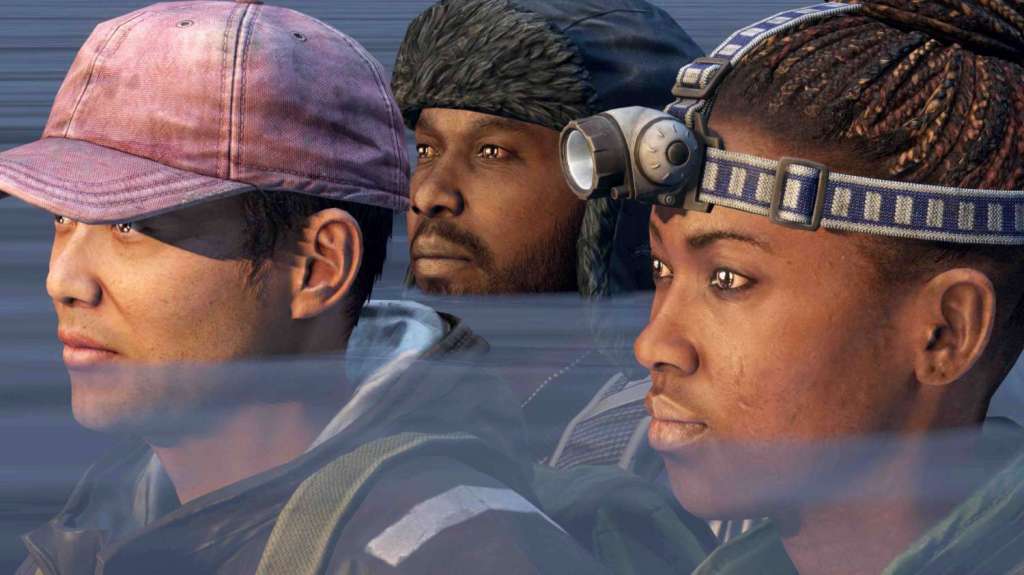
Described as “a film crews enters an online video game [and] come into contact with a community of players and meet their stories, fears, and aspirations” (OIAF festival program), the film is made at the intersection of three distinct (yet not exclusive) genres: machinima (a feature made using a video game engine), animated documentary, and digital ethnographic film. It would be a mistake to reduce Knit’s Island (shot in the DayZ video game) to one single genre as it exists exactly on this intersectional threshold and the three genres are in constant conversation. However, it would also be too simple to say that Knit’s Island pushes the definition of animation because it takes place within a video game: animation as a medium is ever expanding. From its constant redefinition of creative labor as new technologies and practices continuously changed the automated generation of images and the manufacture of animation, the medium has and could never be contained to one strict definition.
Recorded in the popular multiplayer zombie-survival game DayZ by Czech video game studio Bohemia Interactive where players aim to survive by collecting items and fighting either other players or zombies, Knit’s Island follows the perspectives of three players/documentarists (a director, a cameraman and a technician) as they decide to meet with online players to learn more about their gaming experience. However, instead of meeting players on forums and interviewing them via video calls or email conversations as it would be done in a traditional documentary setting, they themselves enter the game. Dressed in modded content’s reporters’ vests, the film angles are limited by the players’ perspectives, themselves depended on the need for the filmmakers to stay alive and not get shot, as any bullet wound would trigger a flashing red vision.
Without weapons, the crew encounter a diversity of players throughout the film who are all negotiating their own relationship to the virtual space and to their digital persona in different ways. If most players introduced to us do not break characters at first during the interviews, only acting within the preexisting dynamics they had established with their teammates (for example, who is a group leader, who is a follower), they quickly reveal their off-line lives.

One particular interviewee allows the documentarists to perceive children’s noise in the background of their voice recorder, a reminder of the plurality of demographics that make up this online community beyond stereotypical expectations of survival online gaming. This intrusion into the real contrasts with how some players instead allowed the documentarists to meet with them under certain conditions, threatening them with firearms as a reminder that Dayz is a multiplayer survival game, not an ethnographic study field. Players are here to play, and instead of relying on the interview apparatus available when taking players out of the game –as other video game documentaries have done, such as Nintendo Quest (Robin McCallum, 2015), The Lost Arcade (Kurt Vincent, 2015) or Atari: Game Over (Zak Penn, 2014)– Knit’s Island takes instead the ambitious decision to keep them in the game.
This choice to carry the exploration of Dayz’s gaming community within the premises of its own virtual world is indissociable from the function of animated documentaries. Already in 1918, for the first time, Windsor McCay used animation to portray The Sinking of the Lusitania, the British liner sunk by German submarines during World War I, as there was no photographic evidence. The animation medium has always allowed artists and creators to go beyond material representation, inviting viewers to imagine other pasts, presents and future as outside of reality’s constraints. With documentaries, the use of animation obviously confronts the exigence of the real usually expected in this genre. But as explained by Alex Widdowson (2018), scholars such as Honess Roe have been critical of attempts to apply non-animated documentary frameworks to animation (2011). Instead, Roe encourages the application of three modes of analysis: “mimetic substitution” (animation supplements missing live-action footage), “non-mimetic substitution” (footage is replaced by illustrative or figurative imagery) and “evocation” (animation is used to represent abstract and subjective concepts). However, Knit’s Island subverts even these three models as its original footage is already captured as animated: the animation does not substitute nor does it replace any pre-filmed content. And that is where the movie ultimately finds its provocative strength: by never denying its animated identity, it integrates it as part of its storytelling.
At a time where animation outsiders try to profit off computational arts, promising to decrease the line between the real and the animation using new technologies, towards “perfecting” the digital image–as if realism was ever any indication of quality–Knit’s Island refreshingly embraces its own medium. In the most emotional scene of the movie, the crew accompanies a group of players in a desert to the digital borders of the world. As they progress, players start to glitch and disconnect, and their peers take it as an indication they have successfully tricked the game mechanics by going beyond what was originally intended. As viewers, we cannot help but wonder: where does the game really end for all of them?
 Short Ends