

Those who know me know that I live and breathe Canadian cinema and am absolutely obsessed with shorts. That’s why for the 52nd edition of the Festival du Nouveau Cinéma (FNC), I’ve decided to focus on their National Competition short film selection, most of which are from the festival’s home province of Quebec, Canada. The themes generally associated with Quebecois cinema are out in full force—isolation, alienation, sadness, familial turmoil, and of course the big D (death).
I’ve compiled a list of five highlights from the five National Competition short film blocks, that are must-sees. Within this list, you will find shorts that tackle difficult subjects with honesty, empathy, and individuality. Fear not, dear reader. I will attempt to keep my musings spoiler-free.

Soleil de nuit – Dir. Fernando Lopez Escriva & Maria Camila Arias
Soleil de nuit follows Sophie, an astronaut in training, and her team as they go about a routine training exercise in what is seemingly a barren and rocky field. However, the land is not as vacant as they had thought. In fact, after being approached by an Atikamekw elder, they learn that they are not even supposed to be on the land. With their training session in danger of coming to a premature ending, they agree to adhere to one request from the man. Bring a sacred message to the spirits of his community now residing on the moon.
Escrivia and Arias take an offbeat approach to the space film as we’re almost immediately shown that this film is not interested in turning out the way you think it will. A damning and realistic portrayal of how settlers treat indigenous traditions and land. Even when the characters are trying to be respectful, albeit just to get their way, their ignorance shines through with their inability to respect the man’s culture.
The strained relationship between Quebec’s government/settlers and those indigenous to the land is one that is well documented on film (check out the works of Alanis Obomsawin, Tracey Deer, & Jeff Barnaby), making Soleil de nuit all the more interesting as it tackles the subject with tact and a dark sense of humor.
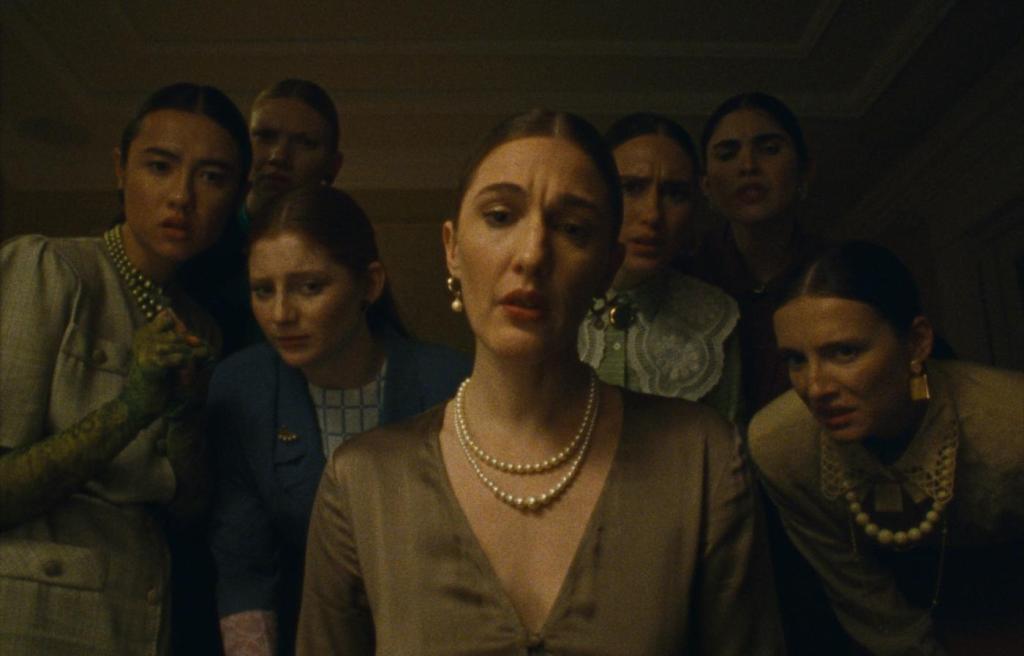
Mothers & Monsters – Dir. Edith Jorisch
Edith Jorisch’s Mothers & Monsters opens with a group of seemingly well-to-do women sitting around a dinner table, sharing a meal. Once the plates are picked up, the children are allowed to enter the room, flocking to their respective mothers. As the children, spitting images of their mothers, pose for photographs, one woman is left without a child by her side. However, once the bell rings, we realize that not all is as it seems within this idyllic dinner party.
Giving a new meaning to the term “IPad kid” Mothers & Monsters puts motherhood and the artifice surrounding it under a giant microscope. Taking the idea that the ultimate goal and path to happiness for women is to have a child to trial. Through gorgeous cinematography and razor-sharp editing, Jorisch explores and condemns the false societal constructs that force women to act in the role of the perfect mother, adhering to out-of-date and out-of-wack ideologies steeped in misogyny.
Laced with the wonderful grain and warmth that comes with 16mm film, Jorisch’s Mothers & Monsters is 16 minutes of pure absurdist bliss with an edge.
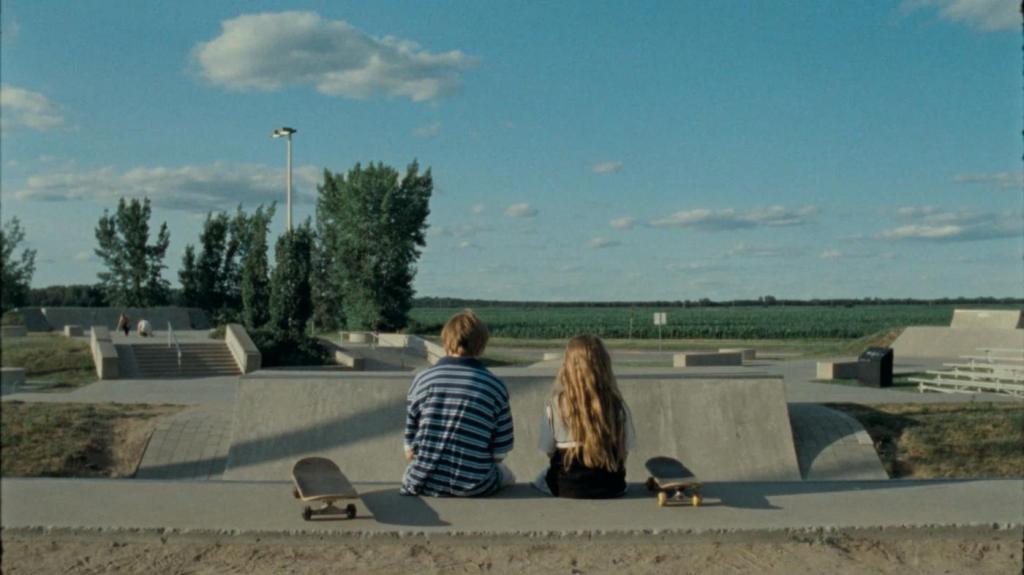
Été 2000 – Dir. Virginie Nolin & Laurence Olivier
Virgine Nolin and Laurence Olivier’s Été 2000 follows a young girl, Sarah, who is spending a summer day at the skatepark with her half-sister, observing her through the haze of a camcorder. Taking in how her sister behaves around her boyfriend, Sarah’s innocent exploration of love comes to an abrupt end once she is forced into an abusive event.
Été 2000 sits in a peculiar space as its aesthetic is incredibly nostalgic. However, the content in this film is anything but. Asking its audience to re-examine the memories you look back on fondly and the mark your actions may have left on those around you. Calling to question the actions of “inculpable” young men and reasserting that boys are never too young to absorb the toxic and dangerous traits they all too often learn.
Tense and deeply saddening, Nolin and Olivier’s Été 2000 is a well-crafted and necessary short that justly demands your attention.
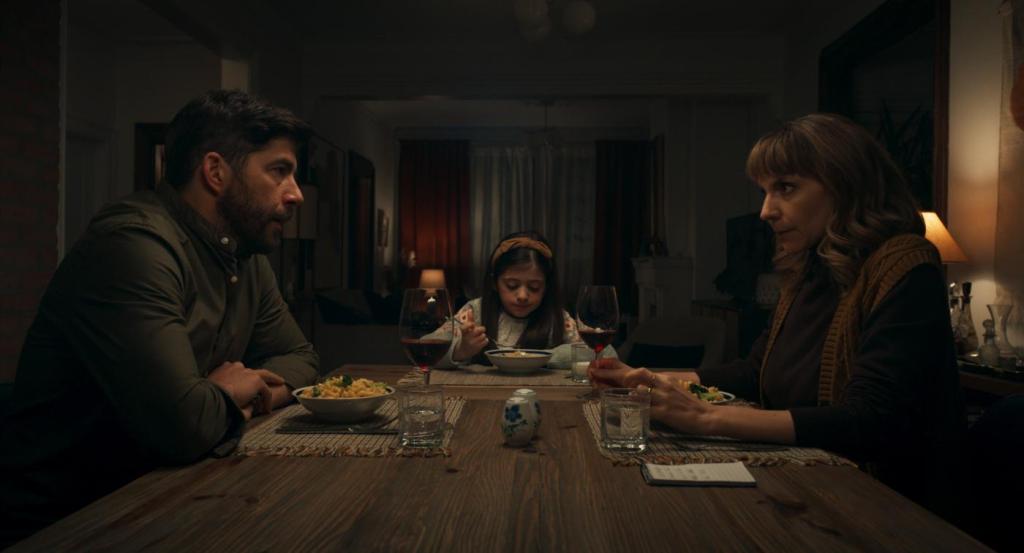
Chat Mort – Dir. Annie-Claude Caron & Danick Audet
Annie-Calude Caron and Danick Audet’s Chat Mort is a film about the inevitable conversation parents must have with their children. When Sophie finds her cat, Croquette, mangled and deceased, her parents Catherine and Louis must figure out how to break it to their child that Croquette has moved on to the big litter box in the sky.
This film took me by complete surprise with its absurdity. Taking what is normally a relatable moment and pushing it to disturbingly hilarious extremes. Although based around grief and loss at its core, the filmmakers don’t allow this sorrow to put a damper on the film’s light tone. However, as zany as this film is, especially considering the twist, it is actually quite touching, helped by the sincerity of the cast’s performances.
Chat Mort is about as dark as a comedy can come. Caron and Audet show that they’re most comfortable in the uncomfortable, delivering a hilarious thirteen minutes of film.

L’été des chaleurs – Dir. Marie-Pier Dupuis
L’été des chaleurs takes place during the incredibly hot Montreal summer (global warming who?). Just trying to go about her day, an incredibly overwhelmed single mother finds herself at odds with her young daughter Maxime as she will do anything but listen. Nearly driving herself and her even younger sister into traffic while her mom was running an errand, we catch a glimpse of the strained relationship between a single parent and their children.
I gotta say, this film is so consistently tense that I was on the verge of throwing up all over myself for the entire runtime. Rare for a drama. In fact, it shares much more tonally with a film like Hereditary, than it does with most dramas. What it excels at is instilling a sense of empathy within its audience. Literally any child of divorce will relate to both sides of the coin equally. Understanding the mother’s frustrations and non-intentional neglect, while also understanding that Maxime, although showing it in different ways, is going through just as hard of a time and will arguably be affected much more by the results of the divorce for her entire life.
Navigating their characters and themes with the prowess of a seasoned vet and so much heart that it is on the verge of exploding, I believe that Marie-Pier Dupuis is a name we’ll be hearing much more in the future. Unsurprising considering the films that Dupuis has worked on as an editor.
 Short Ends