


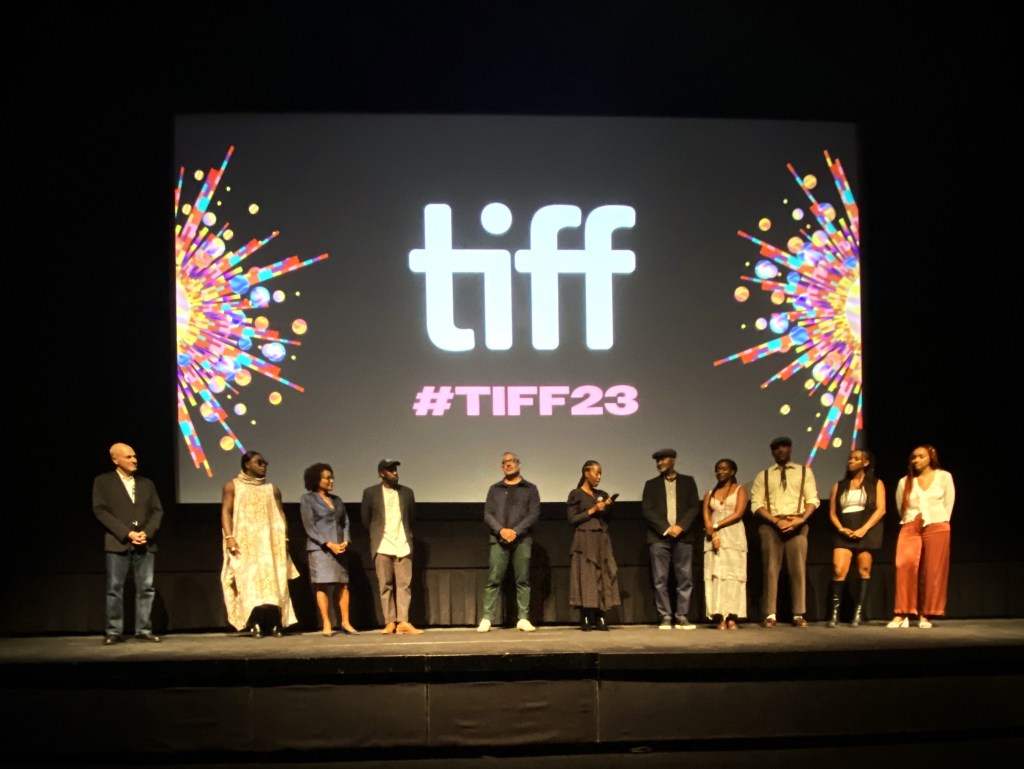
With the American film industry strikes having detrimentally halted or delayed production on many films at different levels for one hundred and forty-eight days, Short Ends Collective had the opportunity to attend the Toronto International Film Festival (TIFF) this year. With resistance on my mind, I gravitated towards films that held the themes of dreaming and wayfinding alternate possibilities, woven between Canadian identities and Black representation from this year’s stand-out programming. Black Life: Untold Stories premiered at TIFF this year, and I had the pleasure to interview Leslie Norville, the executive producer of the series. The eight-part series is an essential, reparative guide to Black Canadian histories that uncovers systemic violence and erasures while recognizing and celebrating our collective excellence. Topics surrounding arts and sports, migrations and displacements, to policing and protest are carefully re-examined and critiqued in their historical contexts with their lasting effects projected into our present.
Elya Myers (E): What was the breadth of your role in the making of this series?
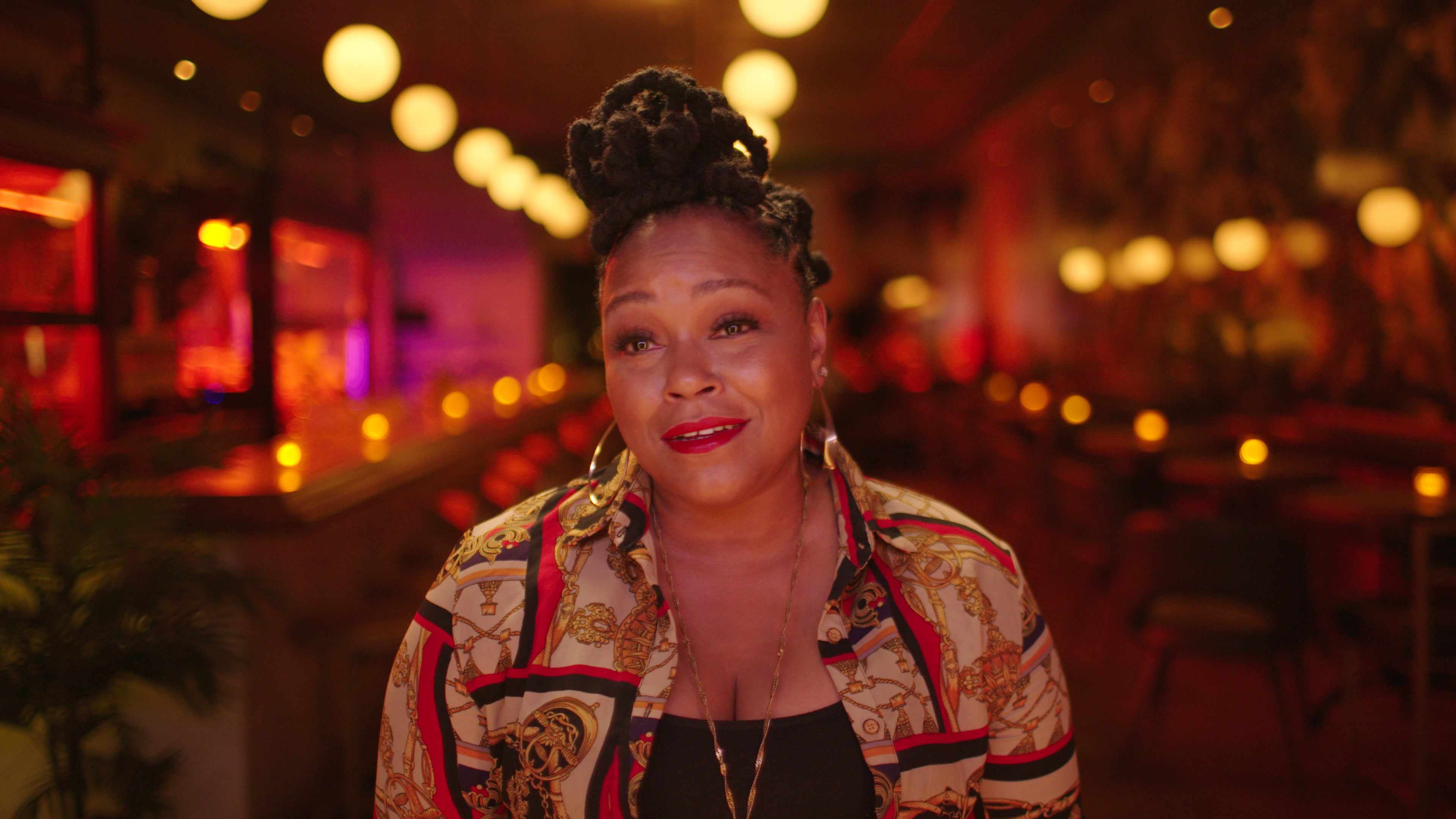
Leslie Norville (L): I conceptualized the series idea and my role as the executive director (EP) and showrunner to bring together a team to carry out the vision of the project. I worked with eight amazing Black Canadian directors to bring these episodes to CBC (The Canadian Broadcasting Company). I was the creative lead but worked very closely in collaboration with these outstanding directors, story producers, DPs, and all the people who go into making something like this happen.
E: I know there is a wide range of topics covered in this series. How did you break down the structure of what you wanted to tackle in each episode? As we know, there is a lot of heavy historical content to lay down first, but that ties everything together well.
L: The history of Black people’s in Canada is long and literally crosses the country, and there is just no way to tell all of these amazing, interesting histories in eight hours. And so, myself, the directors and story producers, the story producers did so much research. There were six months of research that went into unearthing stories and histories, and after all of these amazing stories came to life. It was about going through that process of, okay, is there someone available to talk, are there interviewees, who were the people who were there, is there, because it’s a visual medium, is there archival material that exists to help paint a picture, or are we going to tell these stories using recreations? So, it was a multi-pronged approach, finding the stories we would tell in the series. And again, there’s just so much, and this by no means is supposed to be representative of the Black experience in Canada; it’s a few untold histories that the team thought would be interesting and engaging to put on CBC.

E: From that, I think it’s important to recognize that the series touches on so much more than the Black trauma that we are subjected to every day circulating in media, and while it is important to talk about, it’s not the only thing that’s there. Something I appreciated seeing throughout this series was the wealth of cultural and artistic work that has been done in Canada but… has been shut out and shut down by these large institutions from pretty much the get-go. Not even a chance was given.
I know we’ve spoken about some of the filmmakers and your approach to the series being made; how did you choose the crew and directors? I know there has been a push for training more black filmmakers recently, and some of those filmmakers are based here in Montreal. How important was it to have that Black representation from across Canada?
L: The process was long. There are a ton of Black directors that are working today, and there’s not one singular story of Black Canada. I, myself as one Black Canadian with a singular experience, cannot begin to be able to tell these multifaceted, nuanced histories; in my mind, it does not make sense to task one person with this. So, part of the goal of making the show was to make sure that there were multiple voices and perspectives, and that started with the search for the directors to participate in the show. We did a cross-Canada search for who had made short films before, narrative, TV, and music videos, compiled an extensive list, looked at their portfolio, and interviewed people. It was just about finding people who had interesting perspectives on how they wanted to tell these stories.
We were lucky we found two… and a half because there are three amazing Montreal directors: Michèle Stephenson, who works out of the US now but grew up in Montreal; Will Prosper and Nadia Louis-Desmarchais, are Montreal-based and French-Canadian, so it was imperative for us to really have those voices as part of the storytelling team. And it was amazing to work with more established filmmakers like Michèle Stephenson, but then also work with someone like Nadia Louis-Desmarchais, who is an exceptional emerging talent, and she had made a number of beautiful short films and this [series] is her first longer form documentary. So, it was an amazing opportunity to work with diversity not just in terms of location but also in terms of emerging and seasoned Black creative talent.
E: I appreciated this representation because I could tell from these different perspectives representing each person’s background throughout the series. This stems from my background of growing up in Alberta and recognizing a disconnect between how people see the place I’m from. So, from seeing these disconnections of knowledge and histories that are present across every community in Canada, one of the things I hear about often is how the issues of the past are not connected to the present. But this series is a direct challenge to this stance. How do you think the series will open up new ways of understanding Black identity across Canada? Because we know as [the larger Black community] that we exist and have existed here, but these disruptions and erasures keep continuing throughout history. How do you think the series will be received, and what will the impact be?
L: I hope the series is received well. I hope it’s of interest to not just various Black communities across the country but everyone who lives in Canada. We created a series that is not just imparting a lot of untold histories and stories but is told in a way that is cinematic, entertaining, and engaging so that you are just watching a great story in general. And I hope that people also receive it in that way—that’s just great television.
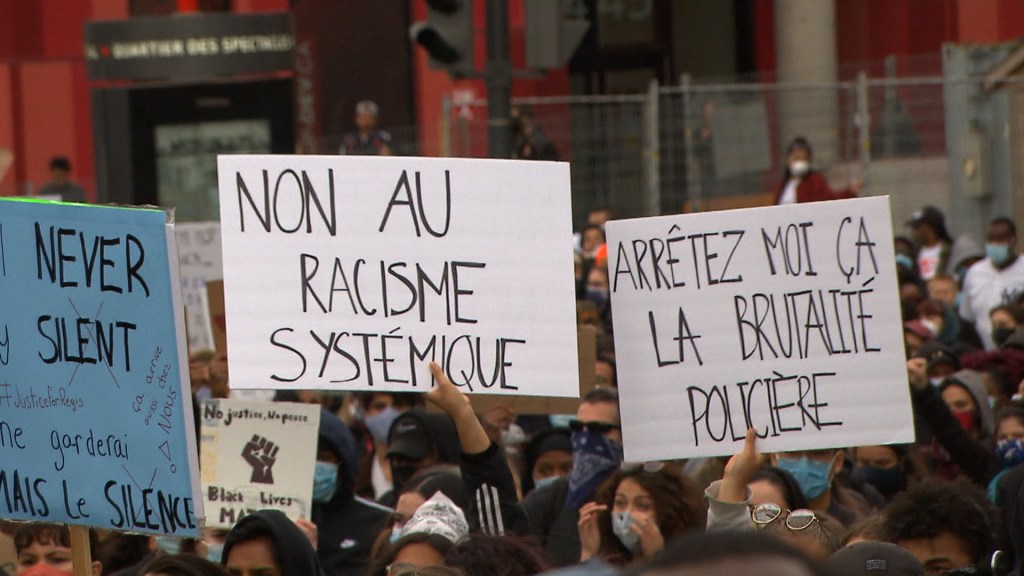
And I hope in terms of impact, you know, how can we actually make change and create policies that affect people when you don’t even acknowledge that there is a history there, that there have been wrongs done to our communities since… for four hundred plus years? From that conversation, those policies that are being made, how can you create school curriculums when there has been systemic erasure of these histories? So my hope is that there 1) is an acknowledgement of our existence. I believe it was your fellow Western Canadian Cheryl Foggo who said that we have been here and our histories are important. I just hope it’s an acknowledgement that we exist and that our stories are important, and knowing them is important. 2) I hope there is long-term engagement on the educational side as well that people can use this material in schools. There have been a lot of people who have been trying to get Black histories built into the Canadian curriculum for a long time. I hope that this helps show the importance of the interest of all people in our histories.

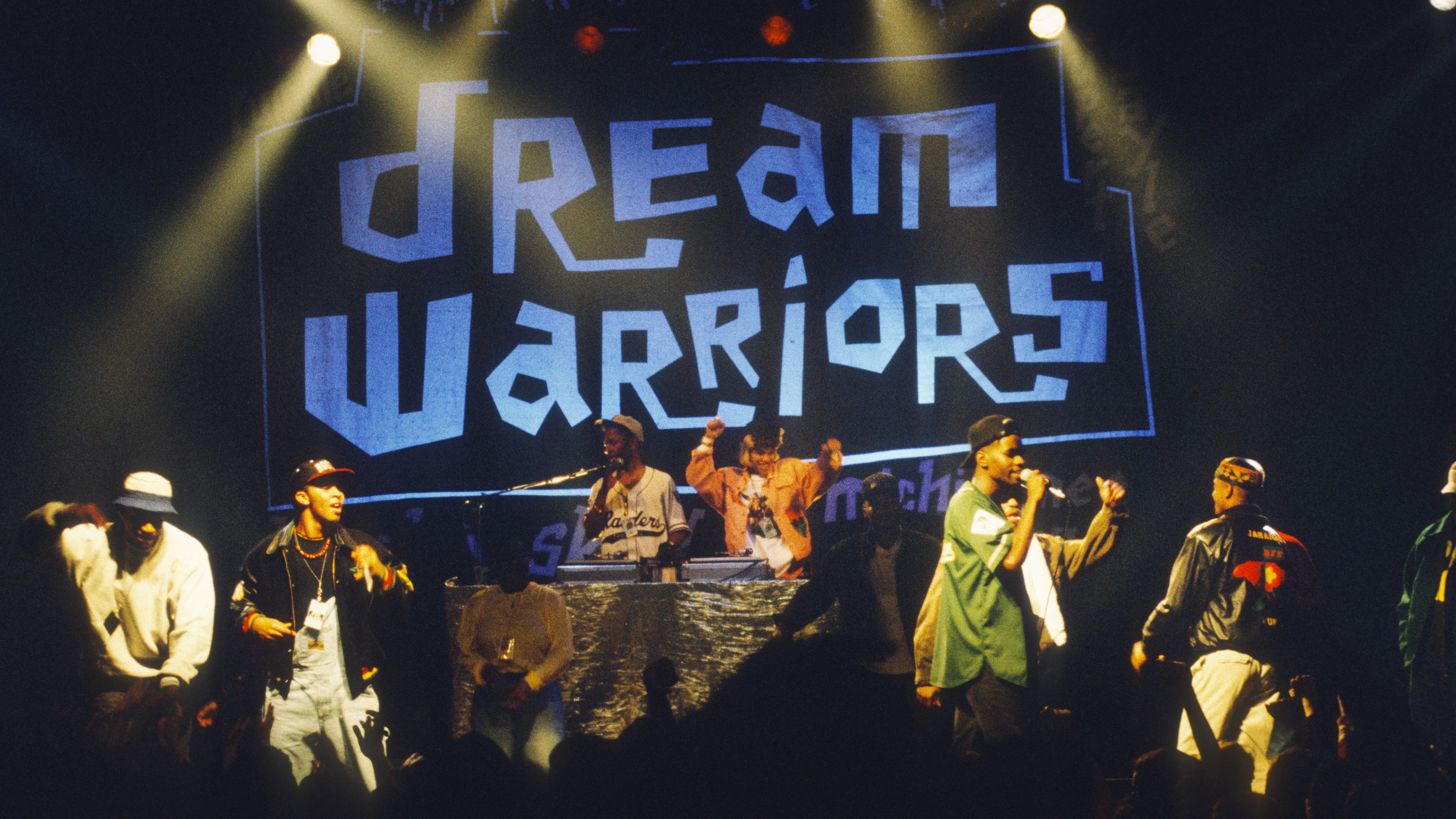
E: I believe it was Michie Mee who says in the episode Northern Beats, “Not everybody will understand all the elements of your Blackness, but we’re all hip-hop.” Could you speak on these intersecting identities and the importance of giving voice and representation to all the different kinds of Blackness. This is because Canada has a particular brand of multiculturalism that it profits from. Still, within our own communities, we get lost [in this division] and lose sight of our connected struggles.
L: We touched a little bit on this, with that being the impetus of gathering Black directors. But, you know, Black Canadians are not a monolith; we are not one people with a high mind, and we all have different experiences. You have people out East who can trace their family lineages back like eight, nine, ten generations back, and then, as you say, people who have come here recently but are Canadian. You have people coming from East Africa; a lot of people now are migrating to the prairies, where there’s a big Somali community now out West. You have Caribbeans who came here during the West Indian Domestic Scheme, you have people from Haiti, people who are descendants of enslaved people in Canada, you have people who are descendants of Black loyalists. That experience is so multifaceted because, again, it’s only eight episodes to speak to that nuance in each of the episodes in that way and to speak to that multiplicity of Black identities. Because, you know, the story of a person growing up in the prairies is very different than someone growing up in a Toronto suburb. Or someone growing up in Prince Edward Island (PEI) is different than someone growing up in Vancouver. So the stories that were selected, the people we worked with, and the people we interviewed, we hope the end game was always to have those multiple voices in there.

When I speak about Black history, I say Black histories and Black peoples, because there are so many different histories and experiences. We’re doing our small intervention by making this series, and there are so many other stories that can be told and spoken about. Hopefully, this sparks some interest to continue to make those stories and for people to dig into the stories that already exist and have been made because some amazing films and documentaries already exist that have been made by Black filmmakers. We highlight in the Creation Exists episode Sylvia Hamilton and Clement Virgo. Sylvia Hamilton is a multiple-generation Canadian from our East. Clement Virgo immigrated to Canada, but they’ve been making great work that speaks to the Black experiences in Canada, so hopefully, this sparks interest in revisiting some of that work as well.
E: Will there will be more of Black Life: Untold Stories to come?
L: There are lots of stories to be told, so let’s see how this is received by the public, but if there isn’t a second season, I hope broadcasters continue to fund Black creatives to tell their stories and help get more Black histories out into the world.
E: Thank you so much for everything; I’m glad I got to do this interview because this was the kind of stuff I wanted to see when I was younger. I’m so happy it’s here.

In the same week, I had the opportunity to attend the TIFF Industry Conference: Empowering Voices in DEI in Film hosted by Indeed. LaFawn Davis was the moderator for the session, leading discussions around the various challenges and opportunities for BIPOC people working in the film industry. The guest panelists included Miguel Angel Caballer from the Rising Voices filmmakers program at TIFF, Indigenous filmmaker and programmer Tristan Grey-Eyes, Executive Director Kadon Douglas at BIPOC TV & Film, and established filmmaker Director X. The panel and audience were lively and engaged in the critique of Canada’s film industry at large while also recognizing the achievements and progress made from those working in these communities to make the industry more equitable and accessible to everyone. From the discussion, unfiltered insight into the topics around the limited representation of racialized peoples and communities in front of and behind the camera, the lack of institutional investment and support to create sustainable futures for racialized creators, that then impacts the kinds of opportunities available, or not, across Canada.
Currently, much research in this area is being done in Quebec’s own film industry by sociologist Idil O. Kalif on the Être Vue/Being Seen in partnership with the Black Screen Office (BSO), in association with Black on Black Films Collective and Coalition Media, researcher and activist Marina Mathieu, as well as, myself in collaboration with the Black Community Resource Centre (BCRC) on this topic. Much of the work that has been done speaks to the moment we find ourselves as Black artists, creators, writers, researchers, and community organizers in keeping the flame alive as we continue to make space for ourselves and for those around us and after us to thrive in. Black Life: Untold Stories is an exemplary piece that honours the work that has been done and reckons with the work that still needs to be done.
All episodes of Black Life: Untold Stories begin streaming on October 25th on CBC Gem.
 Short Ends