
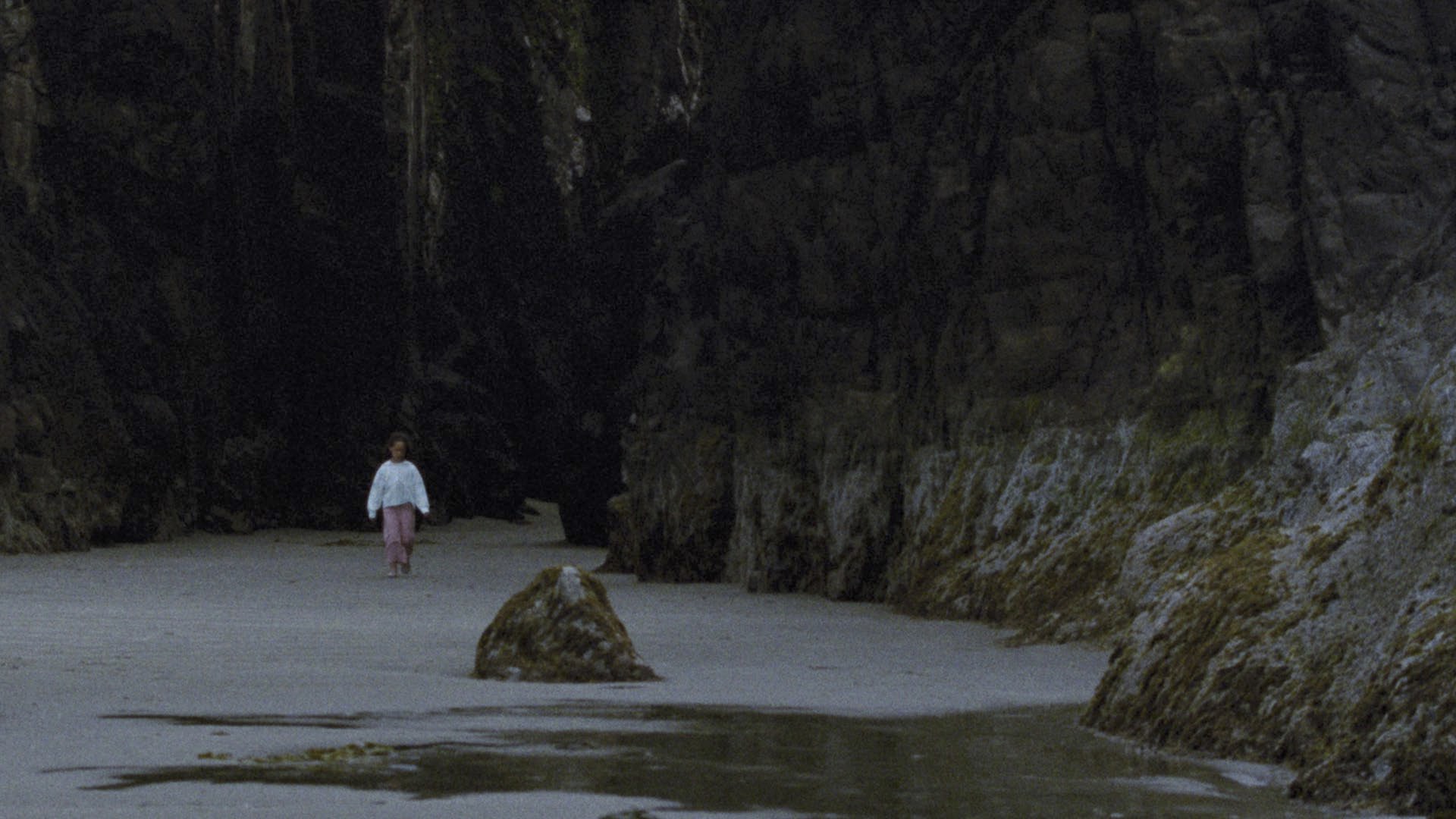
Meredith Hama-Brown’s stunning debut feature film Seagrass evokes 1990s British Columbia, recalling the feel of Canadian cinema of the time (Double Happiness dir. by Mina Shum and Exotica dir. by Atom Egoyan). The film delves into the surrounding nuances and complexities of intersecting identities and intergenerational trauma. The awareness of the camera around each of the different family members was a fond reminder of the many home videos captured during my childhood. Recorded memories give texture to the unseen, unspoken, or unrealized, as those adjacent absences fill the space onscreen. Following her mother’s death, Judith wrestles with depression and pulls away from her family. Haunted by equal measures of grief, loss, and possibility, the family seeks reprieve by planning a getaway in British Columbia for healing and rest unearthing the fissures in Japanese-Canadian histories and mixed identities that connect the past and present.

Winner of the International Critics Prize (FIPRESCI Prize) at TIFF, Seagrass thoughtfully meditates on the frames of references we inherit from our ties to each other, the land, but beyond that, the film opens up pathways back to one another. This film became an instant favourite for me as it touches upon the ways in which mixed identities and diasporic communities are often fraught by these out-of-reach attachments that others grasp onto that don’t necessarily connect us together in the same ways.
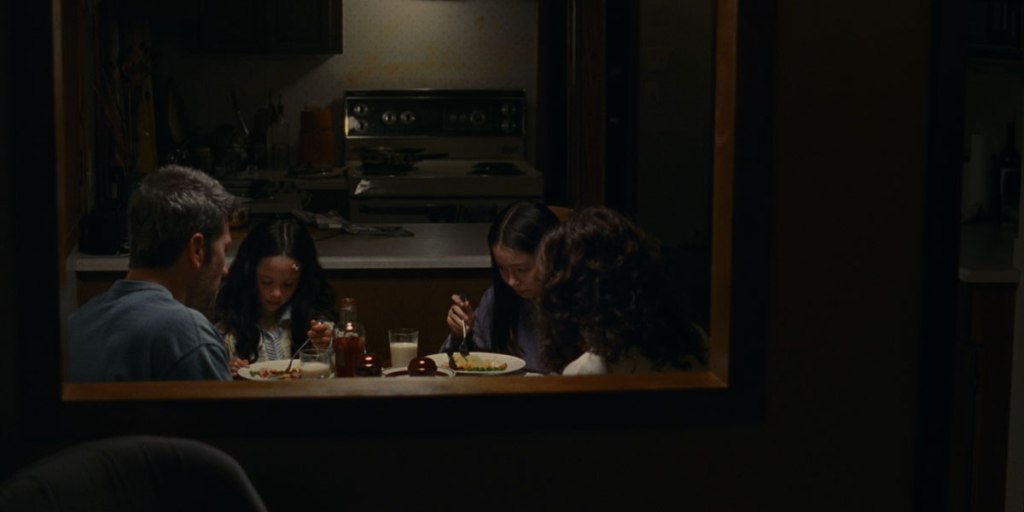
As Judith (Ally Maki) and her partner Steve (Luke Roberts) attempt to reconcile their issues at a couple’s retreat, children Stephanie (Nyha Breitkreuz) and Emmy (Remy Marthaller) wander around and explore left to their own devices as they each adjust to their new environment. With Judith confronting her relationship to her identity, family, and the place she calls home, the interracial couple struggles to reconcile their differences for the sake of keeping the family together. With Emmy insisting on the family being haunted by Judith’s mother’s spirit, Stephanie’s acting out, and Steve’s apathy, to the point of being dismissive, cannot comprehend Judith’s continuing crises, which her now biracial daughters become more subjected to over time. As these seemingly competing tensions begin to unravel at the seams, the family at once drifts in and apart from one another.
Within the last five years, there have been many movies centring around the horrors of intergenerational trauma, however, Seagrass pulls from and honours a particular time in Canadian history with the internment and incarceration of Japanese people during WWII. Using Hama-Brown’s personal history as the point of departure, the film effortlessly ties together themes with childhood, mixed identities, tied to the places we’re from.
Outside of our more informal conversation, Meredith and I also had the luck to hold a more formal interview, kindly made possible by the TIFF media team. The following dialogue was what transpired on September 9th in Toronto:
Elya: What is your relationship to Canadian cinema and identity?
Meredith: I feel like I’m very lucky to have a lot of friends who work in Canadian cinema, who are directors, and who have made their debut features prior to me. And so when I think of Canadian cinema, I think of these incredible mentors and people I’ve had the pleasure of being friends with and seeing go through their initial features as well. I think of Elle-Máijá Tailfeathers and Kathleen Hepburn, who did some story editing on this film and were very much a part of the film. And Sophie Jarvis had her film premiere here last year, so when I think of Canadian film, I think of a community [of artists].
E: How do you see Seagrass as a uniquely Canadian film?
M: I think this is very much a Canadian story because it speaks about the incarceration of Japanese-Canadians and that rippling effect through different generations and how that affected Judith’s character and the children. In that sense, I think it’s Canadian, and also, in terms of the landscapes, it really feels reminiscent of where I grew up in British Columbia on Vancouver Island obviously, there are other locations like that in the world, but I think the film has a strong connection in that sense.
E: How does Seagrass open up new ways of seeing Canadian identities?
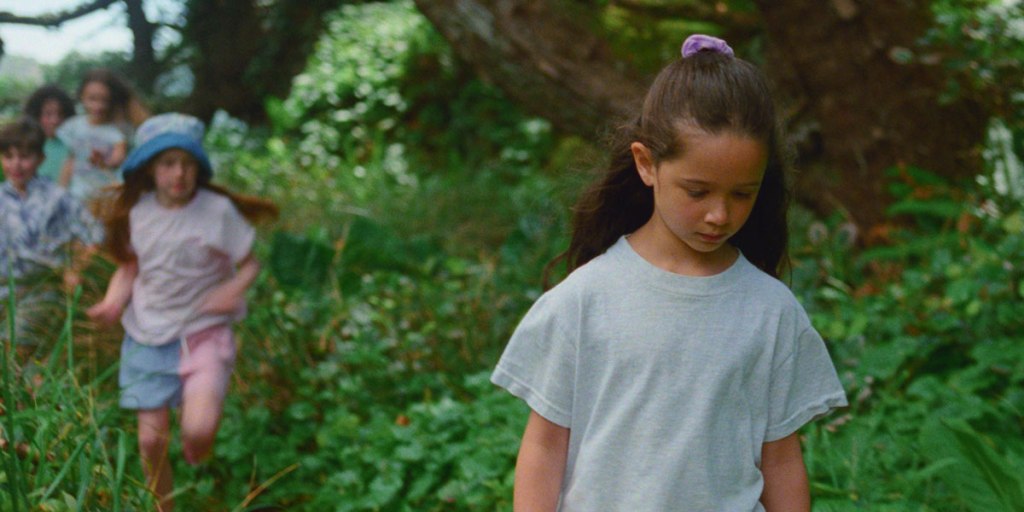
M: I guess this isn’t specific to Canada because this would exist everywhere but the discussion we were having earlier about being biracial and what the kids are going through is specific to that. Someone who is biracial like me, (I’m sure you know too), and it’s such a trope, but it’s so true there’s this feeling where you don’t really feel like you belong in either place sometimes. As much as there is a full connection to one side of your identity you can feel a bit fractured sometimes, fractured by the people around you. This feeling of alienation can sometimes make you feel that way. So I think the film will open conversations about that.
E: In this sense, do you see mixed identities showing hauntings as a form to communicate rifts in understanding Canadian history?
M: This is something that is part of the symbolism of the ghost but [to me] it represents lineage – our past and our history haunt us in a good and bad way. It’s such a part of our make-up and is something that is a living spirit within us and our lives. It represents even our ethnicity and our culture.
E: Speaking of the minimal amount of films that show the nuances of being biracial in Canada, we reflected on the lack of representation when it comes to mixed identities on screen and the ways in which they are often fetishized or erased entirely.
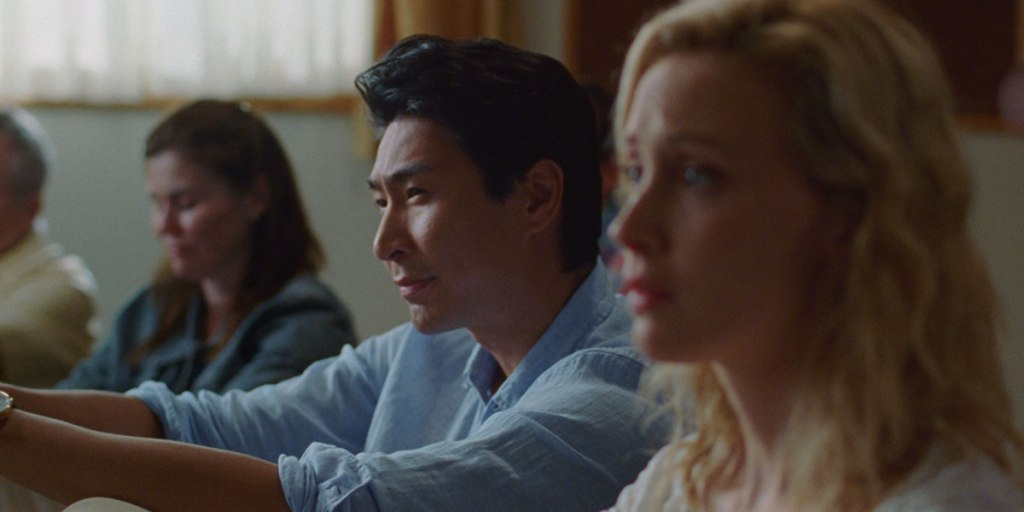
M: The film speaks to that too even when Sarah Gadon’s character, Carol, says, ‘Oh they’re just so exotic looking.’ it’s something I’ve heard before and people think it’s a compliment but people are saying you’re different [your difference shows] and there’s something really strange about experiencing that. I think this film speaks to being Japanese-Canadian but something that I’ve noticed amongst many Japanese-Canadian people is that their grandparents or parents who may have been incarcerated or affected by that event, have a very similar experience to my family in the pain that it caused a generation. They felt so much shame around the event and they didn’t want to speak to their kids about what happened; there’s a real loss of culture and history and something that is very specific to Japanese-Canadian identity. It’s something that I haven’t seen in a film explored in this way so I’m really excited to share that and hopefully, people can talk about it and feel less alone.
E: I think that’s really important to recognize as well because something that is highlighted in the film is the profound isolation and alienation that surrounds and affects the family, specifically the children in different ways. I was specifically thinking of how the film uses the figure of the ghost to reflect on the diaspora, in a way that is detached but always present, to me almost represents the disconnection or the loss of the first generation of the place your family is from.
Thank you for this wonderful interview!
You can see Seagrass during it’s film festival circuit, now showing at Festival du Nouveau Cinema (FNC).
 Short Ends