
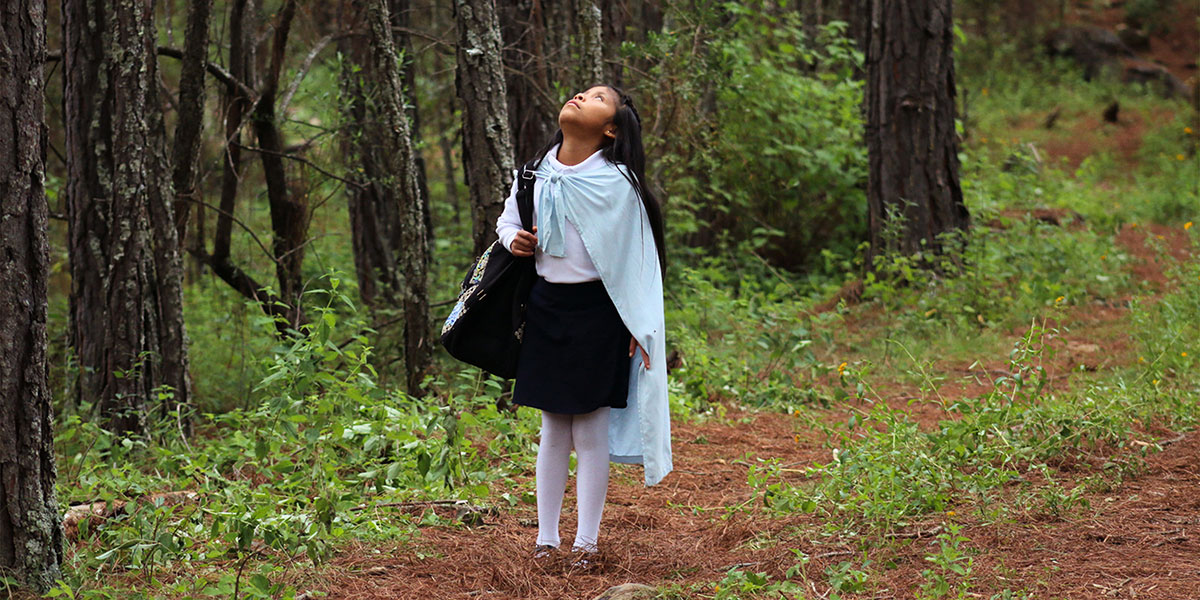
In the frame of the 2023 Edition of the Toronto International Film Festival, I had the opportunity to watch (admittedly, more than once) Ángeles Cruz’s newest feature film Valentina o La Serenidad (Valentina or the Serenity) (VOLS for short). This intimate story follows Valentina, a primary school child, as she deals with her father’s untimely death. The film does not only explore how death is a disruptor of one’s peace but also how this event marks a pivotal point in a child’s life. After discussing with Ángeles and her team about the film’s themes, character dynamics, and the profound cultural influence of loss and grief; I have come to recognize that perhaps VOLS holds a more profound resonance in my life than I initially believed.
With a familiar warm tone, Ángeles, Myriam and Danae introduced themselves and their working relationship before our interview began. Myriam Bravo is a long-time collaborator of the filmmaker, who plays the role of Valentina’s mother, on top of being a producer and the casting director. Danae Ahuja Aparicio is the young actress who portrays the titular name of the film.
The better part of Ángeles work is based in their home region, Villa Guadalupe Victoria and San Miguel El Grande, two communities in southern Oaxaca, Mexico. Cruz takes on the challenge of threading Valentina’s story with the history of her ancestral community traditions. With tenderness and an acute eye for detail, Ángeles treats VOLS as a relevant hyper-regional narrative that acquires universal values as it develops. Her aptitude to connect her Ñu Saavi heritage and locale folklore with human emotions that transpire across borders is fundamental for the movie as the film is equal parts storytelling and cultural appreciation.
Ángeles then explains that the idea for VOLS emerged from her memories as a child when she lost her father at the age of nine. These memories re-sparked during the COVID-19 pandemic in 2020 when the uncertainty she had felt before became prominent again. Cruz then began exploring how the fragility of life and the importance of loss are understood in her community. For the filmmaker, it was correspondingly important to delve into the way people cope with death, especially in her culture, where silence is often the instinctive response. By the same token, for Myriam, VOLS was also the chance to personally reflect on how she has dealt with loss in the past. She believes the film is an open invitation for viewers to embrace this journey with its characters.
Indeed Cruz’s film opens many conversations around death. For example, how do we expect to deal with the grief that a personal loss brings us if we are terrified to even mention the word death around our youngest? Why is death a taboo subject, especially in Latin American contexts when it is so prominent and relevant?
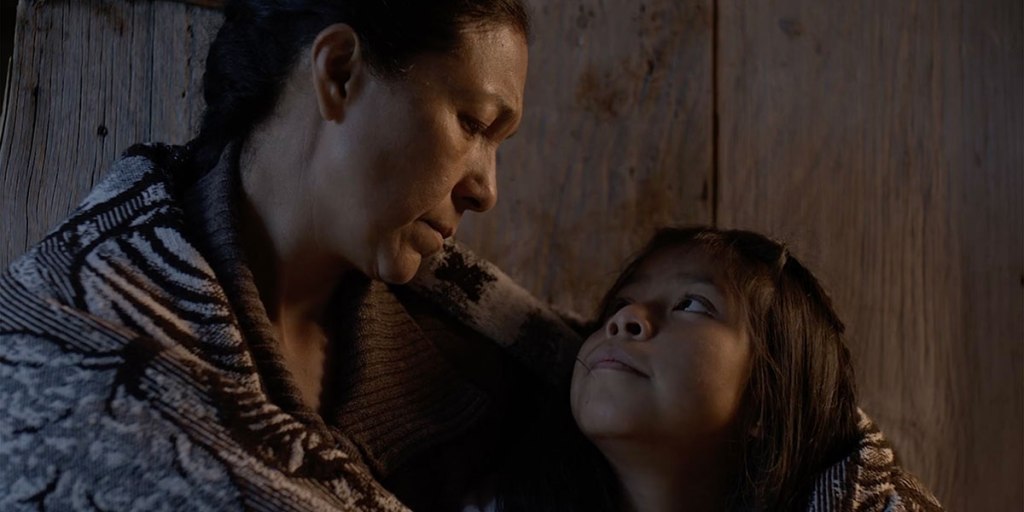
VOLS does not give us a straight answer, this was never Ángeles responsibility or intention. Instead, the film unlocks a realm of possibilities that we might have overlooked. For instance, Myriam highlights the importance of grieving as a community, emphasizing the importance of open communication, particularly when dealing with children who are often left in the dark about such profound experiences. This is seen several times in the film, from the social gatherings to the tête-à-têtes Valentina has with her Mother. However, as Ángeles argued later, there is sometimes non-verbal communication that occurs. Her focus on unspoken gestures of care and attention also characterizes the customs of her community and their attachment to silence.
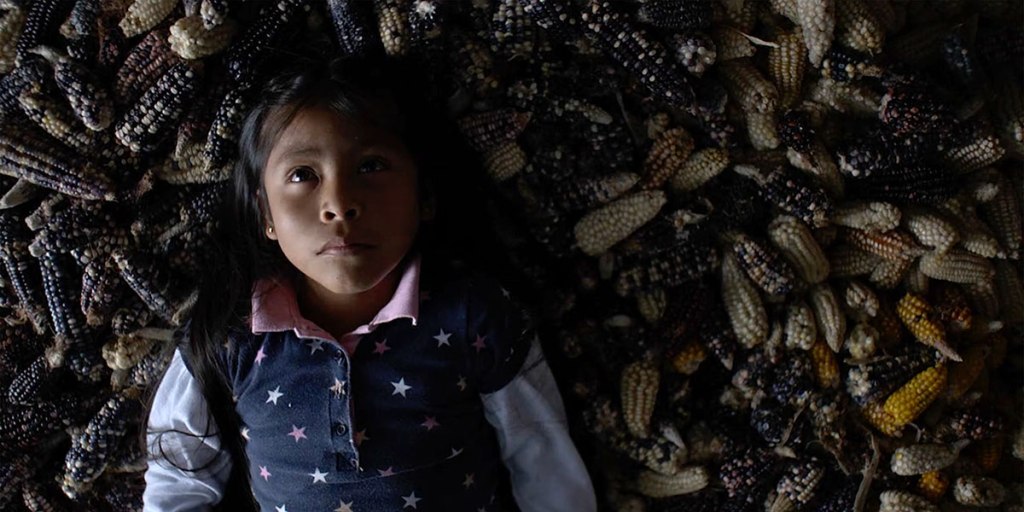
As VOLS is told seldom from Valentina’s point of view, the silences and the social gatherings are similarly frustrating elements for a kid who wishes to daydream and get lost in her imagination. Cruz then focuses on the character’s journey to finding solace in nature, the forest, emotionally connecting with the ancestral grounds where her forebears lived and died. This is the way Valentina acknowledges death and embraces life. She can grasp the idea of never seeing her father again if it means he became one with Earth again. For Ángeles, this was not too hard to direct, as Danae was already very deeply connected to nature when she met her for the first time.
At points, VOLS is so skewed to Valentina’s perspective that we start seeing the child as a catalyst of her mother’s feelings, predominantly guilt. However, Myriam suggests that the experiences of both Valentina and her mother are complementary and that their respective grieving processes align. Valentina’s mother grapples with the loss of her life partner while facing the daunting challenge of raising her family on her own. Hence, the mother’s grief parallels Valentina’s, and their clashes in the film arise from their inability to articulate their pain. Just as Valentina finds peace through nature, her mom finds serenity through her maternal duty with her hurt child.
Ángeles underlines the universality of death in this point. Everyone, everywhere, experiences loss and the process of coping with the void left behind. The filmmaker then adds that this is why Valentina’s mom remains unnamed throughout the movie (she is only referred to as Mamá.) This ultimately symbolizes not only the ubiquitous presence of death but also the omnipresent importance of the maternal figure. Myriam’s character might be steeped in a particular region and traditions, but her motherly instincts transcend cultural specificities.
This part of the relationship between Valentia and her mother is something Ángeles highlighted during our interview. The director draws a connection between the universal maternal figure, an almighty unsung caregiver, and the father, a more elusive but celebrated paternal figure. Cruz points out that Valentina sees her father as a hero whom she can idealize, but she fails to recognize the everyday heroism of her mother who tends to her. On the same note, Myriam also recognizes that the mother in VOLS is more of an anchor than anything else. For better or for worse, she is the one that keeps the living alive. The director noted that although this dynamic could be read in many ways, she wanted to explore how societal attention often focuses on the deceased individual rather than those who are left behind.
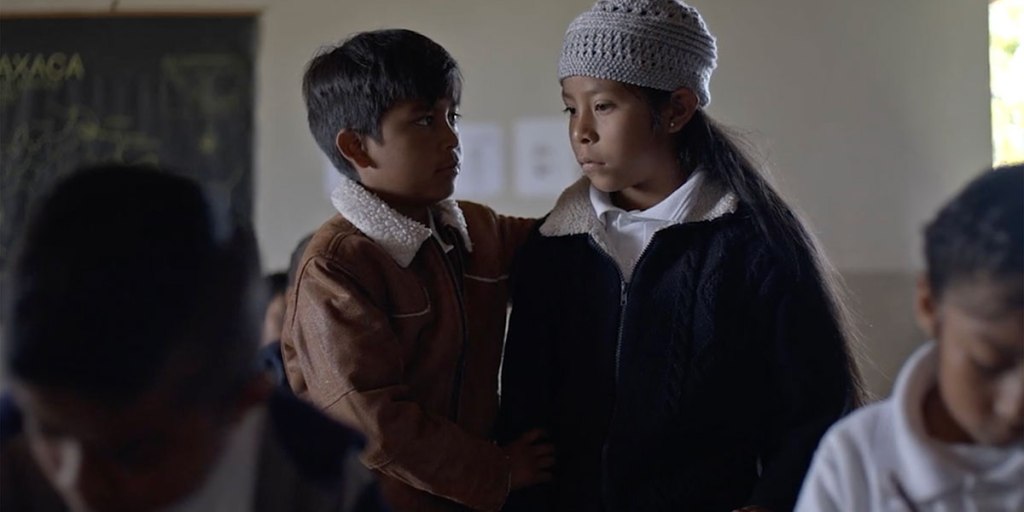
This is why VOLS moves toward grief as a remembrance and treats its narrative as a story of self-discovery and identity. Although Valentina loses the innocence of her childhood as she is confronted with pain and affliction, she eventually is capable of bouncing back. Ángeles explains that this process is like scarring. Growing up, and going through painful events, is going to leave scars, however, the filmmaker argues we need to cherish them. They show we learned along the way. It is a lot like Kintsugi, the traditional Japanese process in which broken pottery and ceramics are repaired with gold. The seams will be more visible but they will only enhance one’s beauty and character.
In Valentina’s case, she was able to repair the cracks in her soul and heart connecting to her imagination and her ancestral traditions. Her father, now embodied as the spirit of the river, communicates to her in Mixtec. Real or not, this proves that Valentina is reflecting on her heritage, her curiosity drives her to the traditions she probably would have missed if not for this pivotal event. This connection to her roots becomes her treasure and a means of understanding her identity.
To conclude our enriching conversation, I inquired Ángeles about the title. Why does she offer Valentina the option and not the goal to pursue serenity? She explains that every single one of us faces that choice when confronted with loss. We can choose serenity or anger, peace or fury. Finding it though is one of the most challenging aspects of dealing with death. This is where Ángeles and her movie shine the brightest, she tries to convince us that even if it is a task too heavy, serenity is always the way to live your life.
 Short Ends