
The shattered limitations imposed by phantasmagoria are part of why it has the potential to be ever-evolving in visual culture. The genesis of phantasmagoria can be traced back to the eighteenth-century through ghost lantern shows, and later successfully adapted into film. Yet, there are contemporary methods of the phantasmagoric which abstain from using the popular formula of iconography.
The phantasmagoric experience is concretely related to the encountering of a dream-like and illusionary state, inducing an uncanny experience. The rapid evolution of technology has seemed to become mundane where certain digital phenomena are dismissed despite their transgressions. Users of technology encounter people and moments that now belong to the past, which means encountering “ghosts” can be a part of the everyday. The omnipresence of ghosts is a compound element of phantasmagoria as well. The definition of ghosts, in a broad sense, refers to the conjuring of the past into the present in an abnormal respect. Contemporary technology has proved that we encounter “ghosts” on an everyday basis, even if the individual taking life on our screen is not dead.
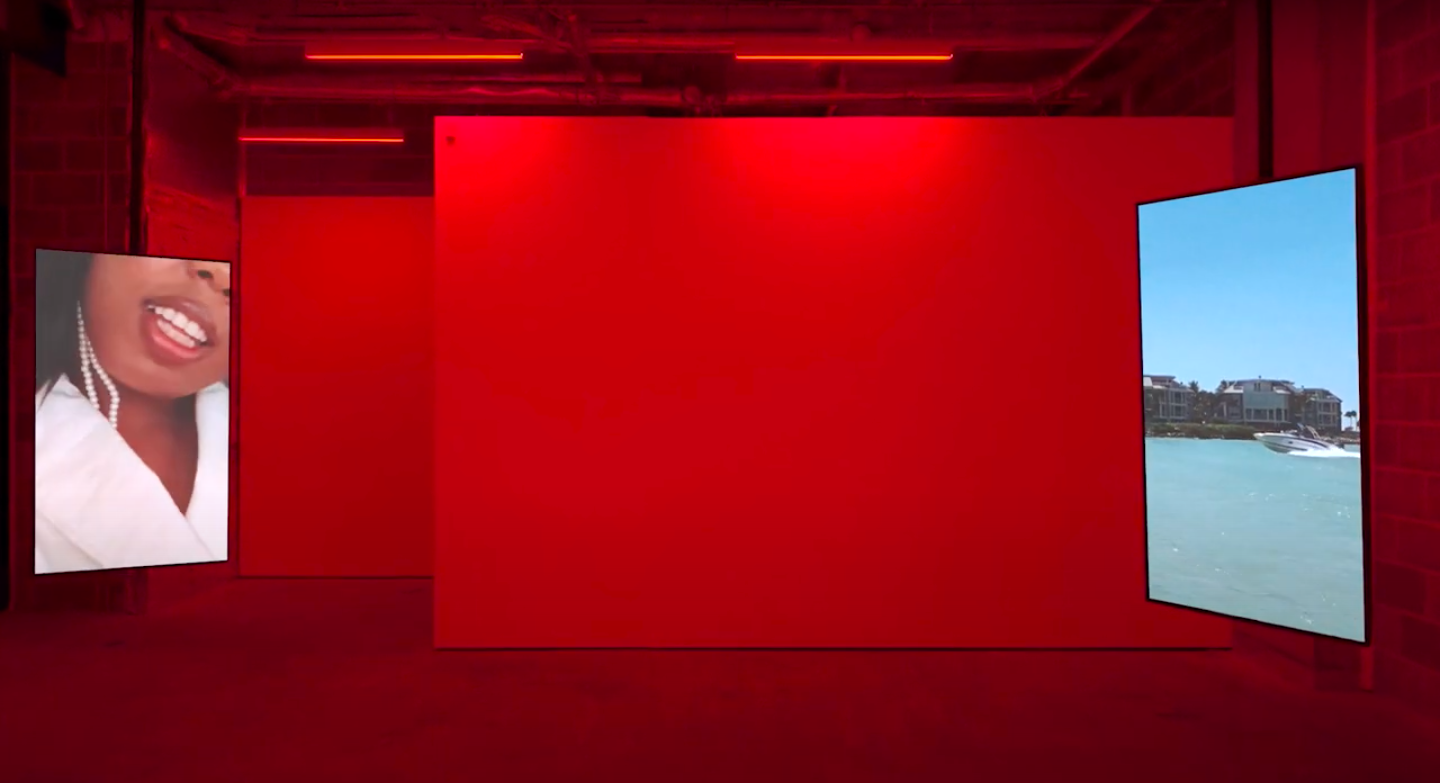
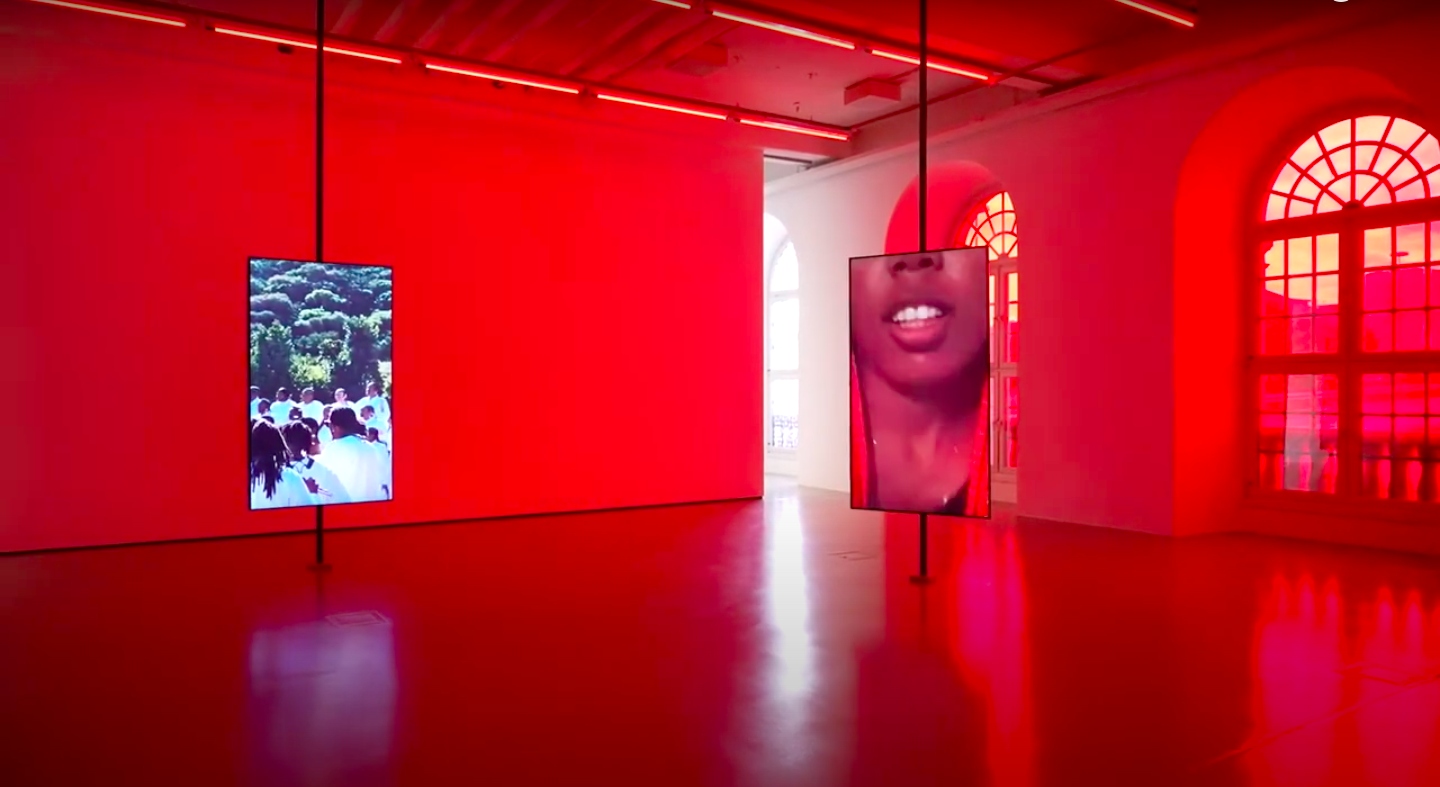
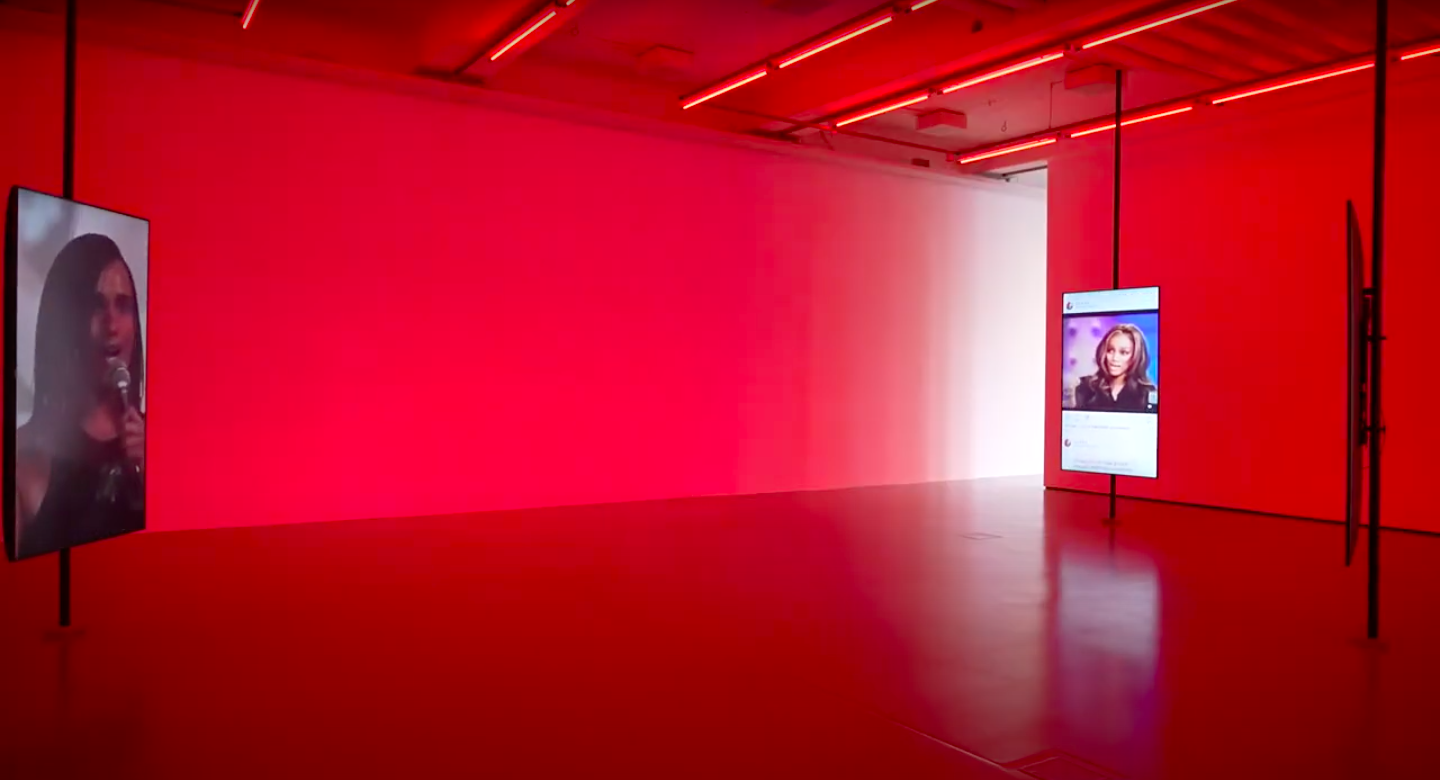
Fig 1 -3
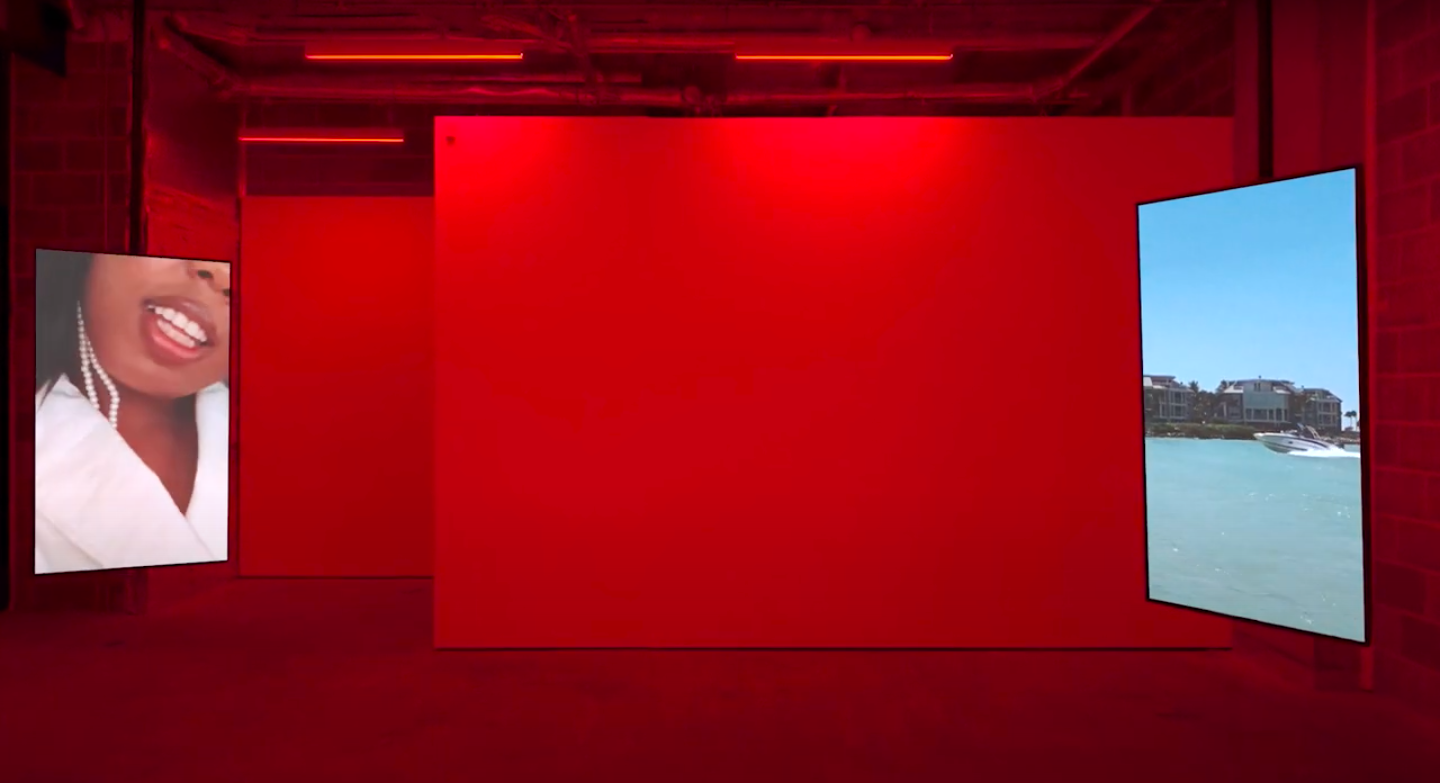
Certain digital productions are innately phantasmagoric due to the surreality of what they put together. Ugly Plymouths (2020) by Martine Syms is an intriguing example of the way in which digital art can trigger phantasmagoria without intense, overstimulating visuals and sounds. In her work, Syms merged a series of different clips together which begin on one screen and branch-off into three sister screens. Each screen is indicative of the three protagonists of the work, Hot Dog, Doobie, and Le Que Sabe (Sadie Coles HQ, 2020) (fig. 1). The video is overlaid over a tardily changing background of the Sadie Coles HQ art gallery, altered to be seen in all red. The video can be watched as is online, while some were able to experience it in person within an art gallery.
The digital medium of her work allows for it to be removed from one context into another, representing its malleability, shifting and transforming depending on the viewer’s locality. Some videos such as the one from Syms’s show Aphrodite’s Beasts at the Fridericianum Museum in Kassel (July 3, 2021-January 9, 2022) offers a longer presentation, since the video oscillates throughout the exhibition (fig.2). At the Aphrodite’s Beasts at the Fridericianum there are unseen clips that are not shown in the Sadie Coles HQ video, which ultimately changes the relationship and understanding the viewer may have with each installation. The malleability is part of the glue of phantasmagoria and is effectively part of Ugly Plymouth’s online dynamism. Within the Fridercianum video, various entertainers and figures are shown such as Alicia Keys, Tyra Banks, Stephen Curry, and Lauryn Hill. The meshing of popular culture adds a new meaning that the Sadie Coles HQ online video iteration does not have (fig.3) (fig.4).
Ugly Plymouths orchestrates what appear as random moments and conversations plastered over top the visuals, in a similar manner that we are also confronted by in the online quotidian. Hot Dog, Doobie, and Le Que Sabe create dialogue in a mode that is intended to
represent the asynchronicity of each, which “define the distance between them more than the relation” (Sadie Coles HQ, 2020). Looking at the essentialism of humans, being visually confronted by various utterances of humanness all at once, taken in different contexts, in tandem with plugged-in sound, is not something fully natural outside of the dream world (or our imagination as a whole). The overlaying sound, juxtaposed visuals, and the discordance among the three narratives contrives the overwhelming incentive of phantasmagoria.
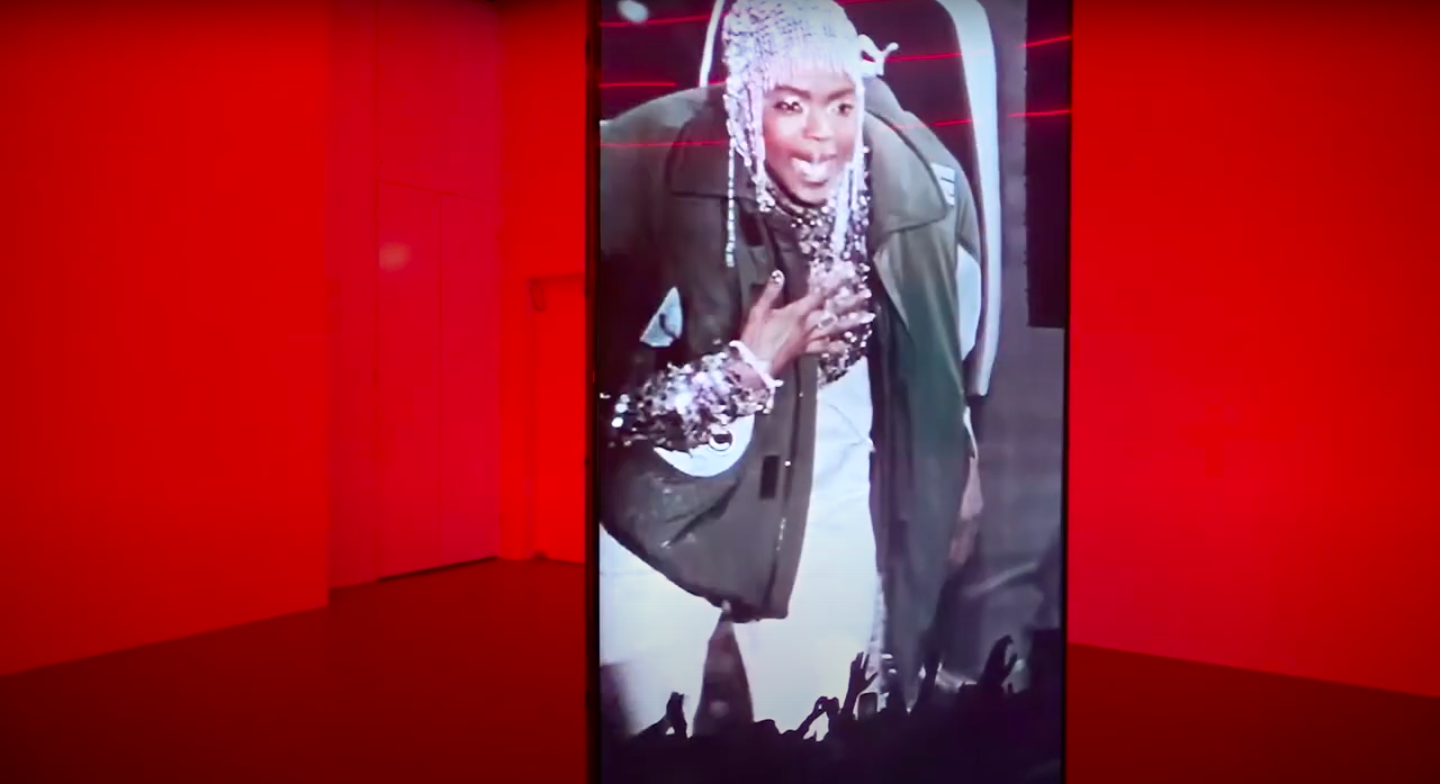
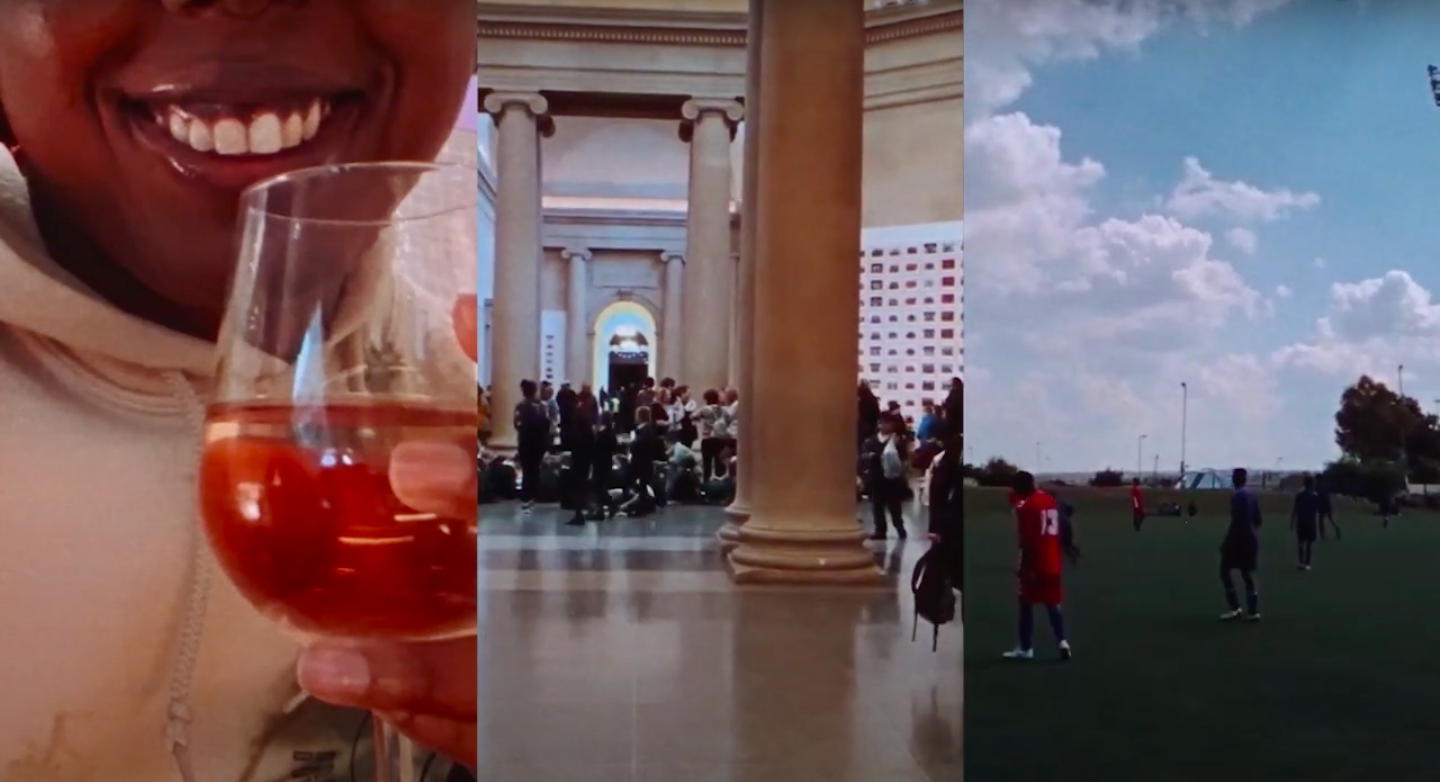
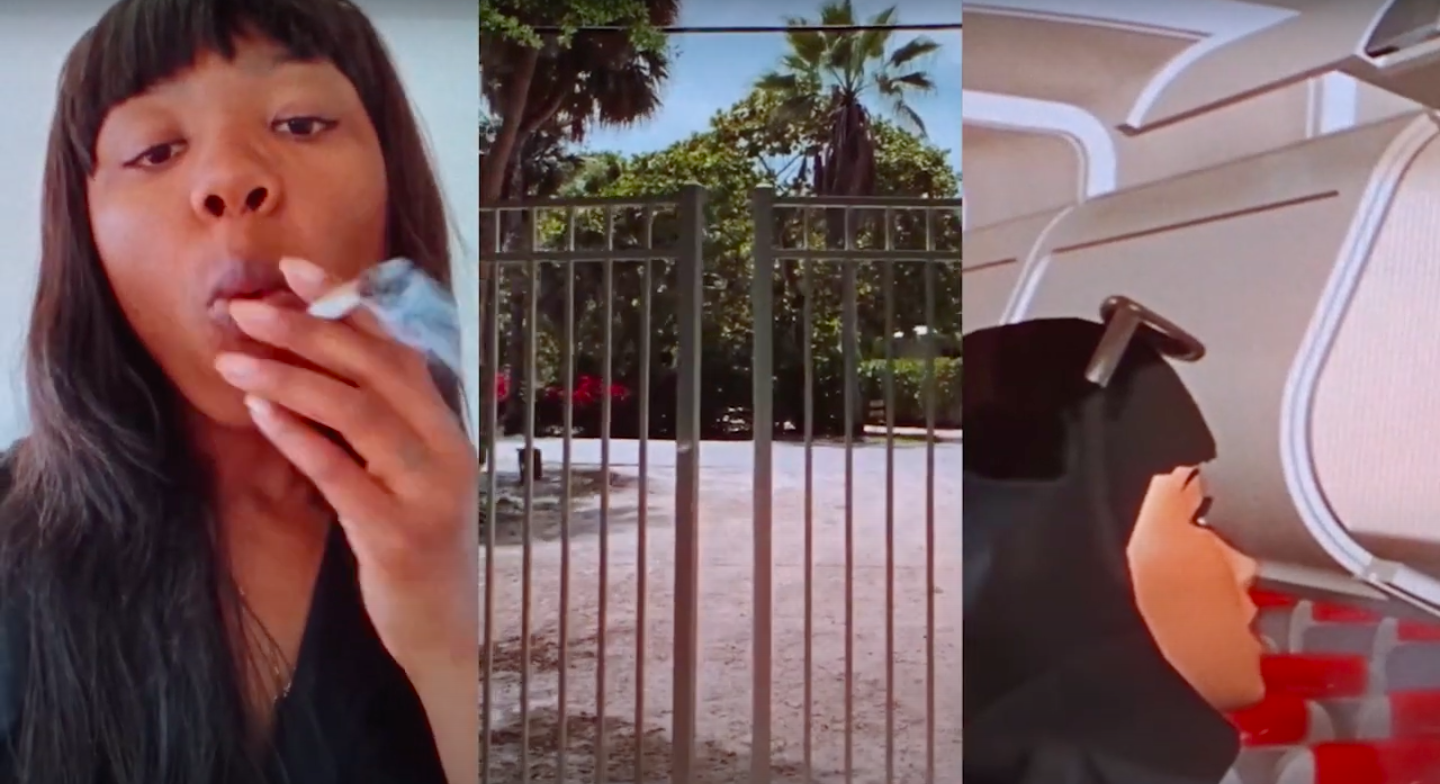
Fig 4-6
Digital culture has allowed people to explore the limits of production in a sense where phantasmagoric experiences are more common than not. Syms offers her audience a plurality of being not only by using her own body, but with a digitally constructed version of herself as well (fig.6). She combines her multiple appearances and shows us her world from her eyes. Her camera in each clip acts as a container of what she sees and gazes at, and plants us directly into her head. We see what she desires us to see, the same way our brains, in a sense, plaster overwhelming visuals and sounds for us to encounter in the dream world. Deciding to watch someone else’s construction makes us give up our autonomy temporarily to experience their conundrum.
Syms’s body (bodies) as well as the others we encounter throughout the duration become ghosts in their own right by pulling moments of the past repetitively into the present. The phantasmagoric experience presents utterances of ghosts which Marina Warner examines in Phantasmagoria: Spirit Visions, Metaphors, and Media Into the Twenty-first Century (2006). Technology used for recording and vessels established to depict said recordings, provides a new mode of seeing “ghosts”. The manner that Warner describes how material objects such as “…wax, breath, cloud, light, shadow, ether…”(12) become containers for spirits, is the same way that the internet as a vessel becomes for the digital reconfiguration of Syms and the other subjects (fig. 7). Ghosts inherently shatter the boundaries of past and present, which is also the case in Ugly Plymouths. As mentioned before, Syms places her viewers to relive moments she has encountered through her recording device. Since she deals with digital constructions of the self in conjunction with Black and gender identity in her body of her work, Ugly Plymouths goes to further lengths that must be considered in an analysis.
Visual culture has been at fault for ill representations of Black women and femme representing people, often lacking any dimensionality or relying on tired stereotypes. This topic has been critically explored by bell hooks in “The Oppositional Gaze: Black Female Spectators”
(1992). Representations of Black women may include using them as a catalyst for the white protagonists storyline, which strips the character’s potential for any depth. Although we can not see Hot Dog, Doobie, Le Que Sabe, we see others such as Syms herself. Her image is not perpetually populating the screen(s) although she continuously resurfaces while she engages in different activities. In Syms’s work she represents the realm of digitality and selfhood in relation to Black identity, intersections that require a lot of discussion in the contemporary world. Especially since a plethora of digital Blackface has taken up space online, prioritizing Black images when they fit white narratives. The prioritization of Black palatability means that Black authenticity and depth is often unregarded in online media. Although phantasmagoria can be
understood as a branch of horror, it also can reclaim spaces and places formerly occupied by oppressive powers.
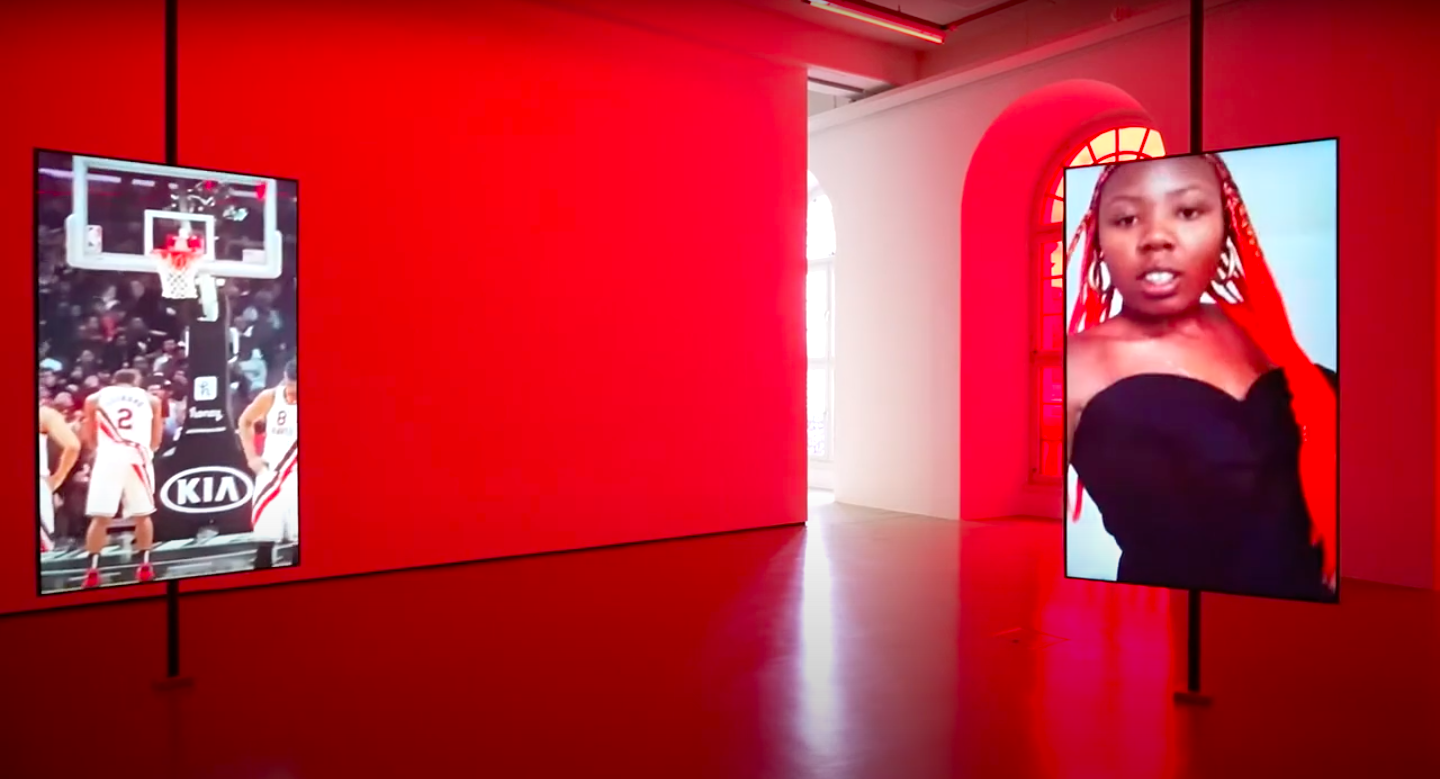
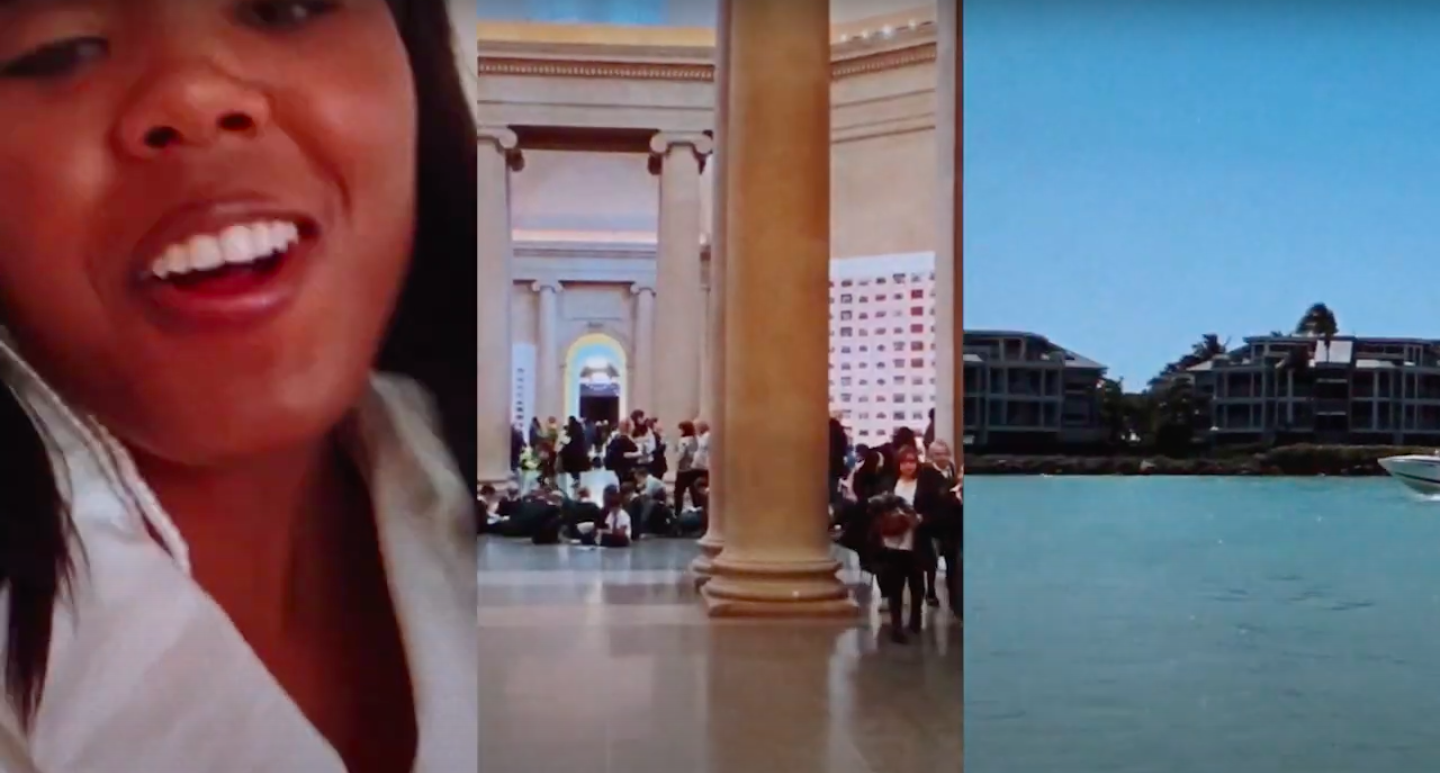
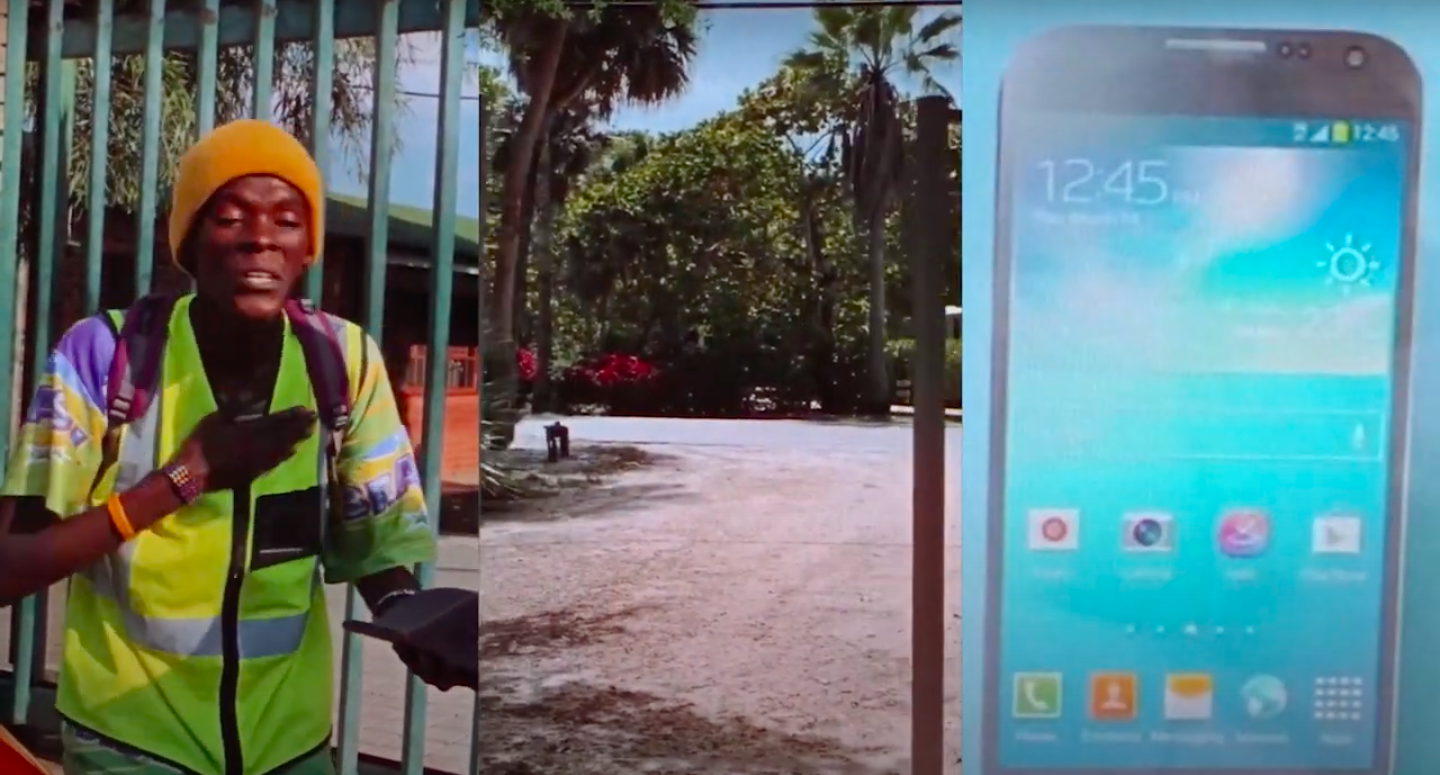
Fig 7 – 9
Phantasmagoria’s intersection with Black identity confirms the necessity of ghosts as an approach to resistance (fig.8). In Lisandro Suriel’s fellowship, “Phantasmagoria: The Realms of the Black Imagination,” (2019), he recounts the experience of becoming a ghost within a liminal space, and thus an experience of haunting (2019). From this, both transitional spaces and the concept of “haunting” are necessary aspects in countering racialized homogenization (Suriel, 2019). Identifying the Black body as a ghost maneuvers it away from Black erasure, and uses it to transmit past experiences and unearth truths (Suriel, 2019). Syms’s periodic appearance of her body transforms her into a ghost and refuses any semblance of erasure. It takes her own experiences and those of her protagonists and replicates it for the audiences to then internalize through visuals and sounds (fig.9).
As stated, the three on-screen perspectives are displayed concurrently even though they are intended to represent a lack of harmony. The slight discomfort from the visual and auditory dissonance is imperative to the experience. White protagonists are granted the capacity for adversity, which is not often the same for non-white characters. Syms centres these storylines while also using herself to take up the screen. Not only do the videos and images in the video represent the relationship of the past becoming into the present, but the gallery background also represents a second past tense that is brought into the immediate present. The gallery background in the Sadie Coles HQ video represents another way that immortalized moments become centralized into the artwork (fig.10).
During the first fourteen seconds of the video, an individual can be discerned walking on the street outside of the gallery space. These micro interactions and occurrences exist in the peripheral of the artwork, centering the narratives of the video. The complexity of the story line becomes the primary focal point and demands attention. Although this has been explored throughout film, it is also recently being discussed in the internet world. Black online representation outside of memeification is requisite especially with how the impetus of digital Blackface has been normalized. Digital Blackface, which is an echo from minstrel performances, takes form from memes and other reactionary vessels which often utilize Black bodies (Wong, 1). There is a forced labour imposed onto the Black individuals whose images are appropriated for internet users to express their own narrative. Stripping the forced performativity on Black characters can be disruptive. Digital Blackface aims to homogenize which is why, as Suriel mentions, ghosts are necessary in producing real Black narratives divorced from the whitened gazes (Suriel, 2019). Their intangible vessels “possess” our minds temporarily and impose the narratives encountered in Ugly Plymouths. The multifaceted composition is not necessarily comprehendable and it should not have to be. The refusal to be digestible is an element of what creates a resistant artwork (fig.11).
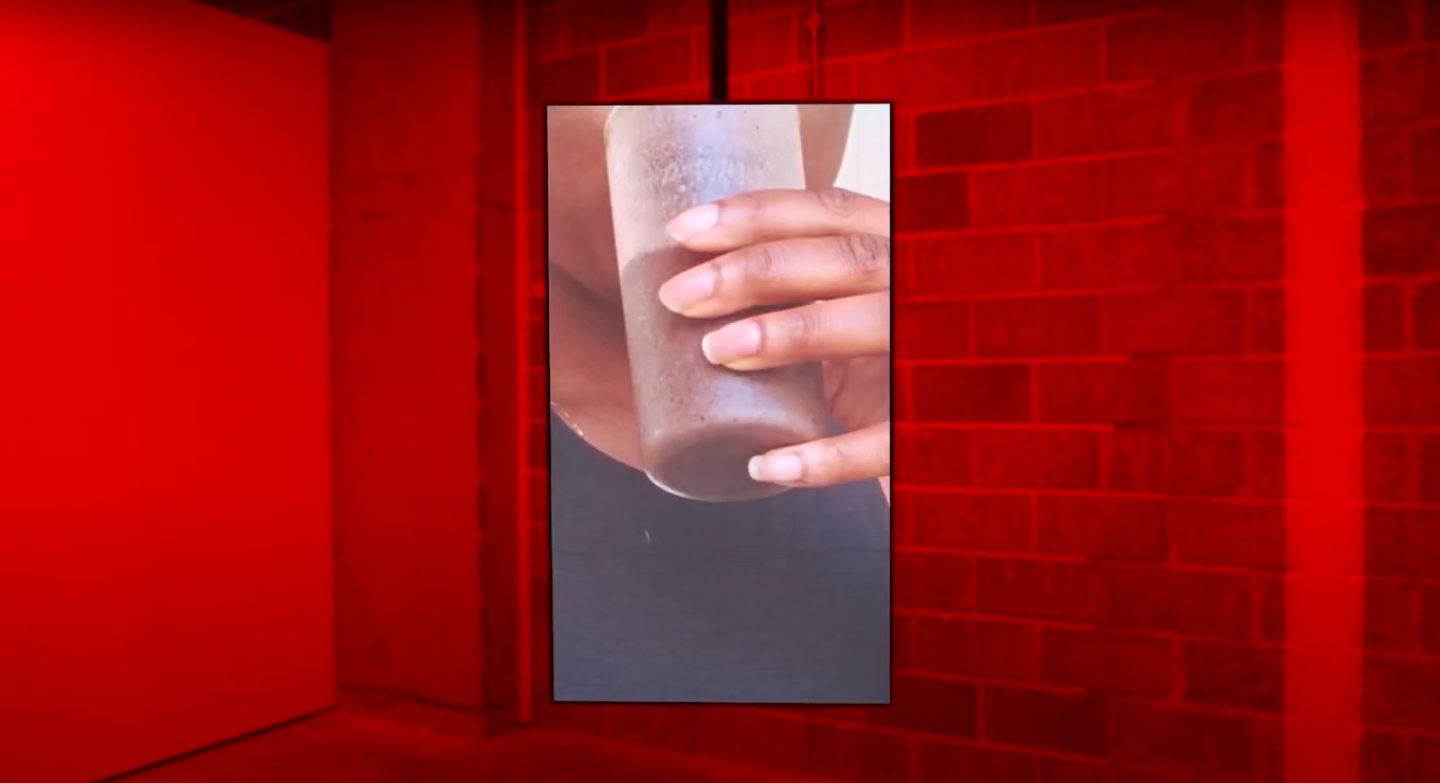
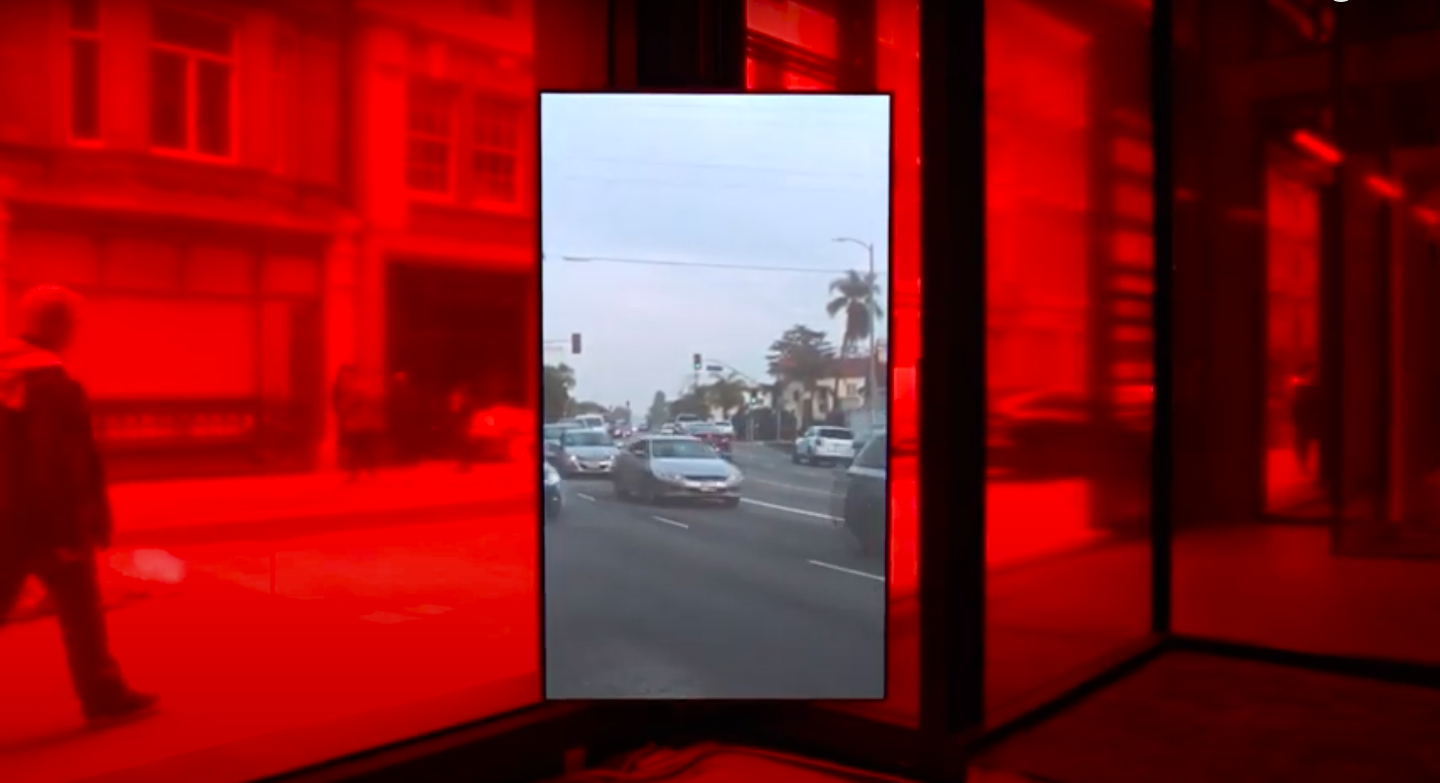
Fig 10 – 11
Syms’s work is so dimensional in its conjunction of many purposeful and potentially unintentional discourses. Whether or not Syms would label this piece as phantasmagoric herself, her exploration of the digital world’s complications and nuances does align with the
phantasmagoric in a plethora of ways, such as recognizing the illusions that we encounter through social media and other online vessels of “self-hood”. In addition, she represents how we encounter “ghosts” daily and sometimes, multiple times at once. We hear the voices of Hot Dog, Doobie, Le Que Sabe, and we see others on the screen. Small moments, sounds, and movements of the past become centralized and prioritized. Syms employs everyday actions and sights into the video as well, exhibiting how mundane activities are in fact complex. The Black body is also centralized representing the autonomous dimensionalities that Black individuals are not always provided with the platform to do so. The liminal space that Syms navigates produces ghosts that inform, regulate, revoke and modify the digital realm.
BIBLIOGRAPHY
Sadie Coles HQ. “Ugly Plymouths.” Martine Syms Press Release. February 12. 2020. https://www.sadiecoles.com/exhibitions/831-martine-syms-ugly-plymouths/press_release_text/.
Suriel, Lisandro. “Phantasmagoria: The Realms of the Black Imagination.” Tilting Axis Fellowship, 2019.
Warner, Maria. “Part I. Wax.” In Phantasmagoria: Spirit Visions, Metaphors, and Media into the Twenty-first Century, 21-47. Oxford: Oxford University Press, 2006.
Wong, Erinn. “Digital Blackface: How 21st Century Internet Language Reinforces Racism.” Charlene Conrad Liebau Library Prize for Undergraduate Research. Berkeley: UC Berkeley, 2019.
 Short Ends