

For the first time, Short Ends had the opportunity to attend the 2023 Hot Docs 30th Film Festival anniversary and we’ve collected a compelling short list of a variety of documentaries featuring the perspectives of writers Elya Myers, Juan Ospina, and Maria Natalyuk.
We are proud as well to have dedicated a special portion of our time at Hot Docs to focus on Ukrainian cinema. Our writer Maria’s coverage will reside on a standalone page which you can visit here.
Innocence – Dir. Guy Davidi (Denmark, Finland, Iceland, Israel)

Guy Davidi, previously known for his collaboration with Palestinian filmmaker Emad Burnat on the film Five Broken Cameras (2011), a documentary that explores life in the occupied territories, this time turned his attention to the opposite side of the conflict: the experience of young Israelis within a military structure and their relationship with the government. Innocence consists of three main components, arranged in the form of a collage: the recording of the children at school and their subsequent ideological interpolation into the militarized society; the reciting of the diaries and letters of young individuals who tragically committed suicide during their mandatory service; and the home footage videos of these individuals at a younger age. This format of narration constructs a brutal and terrifying picture of the militarized society and overwhelming control of social life by the government, where the individual is constantly under the pressure of fitting into presupposed standards. And while the film skillfully points out the dangers of the militarization in Israel one aspect of the issue remains largely ignored: the question of Palestine.
Russia and Israel always had an interesting relationship that was built through the repeated waves of immigration from the former, specifically during turbulent political periods. The recent spike in ex-pats was caused by the War in Ukraine and the increasing repressions on the part of the government, urging many to seek refuge in Israel. One of my long-lost acquaintances, to whom I am now only connected through mutual liking on social media has become one of these expats. Condemning war, the person left for Israel and sometime later pictures of them in the IDF military uniform appeared on social media. This is still challenging for me to understand, as one runs from the surrounding violence and war to proudly accept the very military life itself in the other country. Davidi in his documentary answers my question, demonstrating a complex social structure that does not only legally punish the individual, but turns one into an outcast if they refuse to accept military service as a part of their life.
Innocence demonstrates the educational conditioning and the level of normalization of militarism in society from a very young age. Whether it is associating the color green with the uniform of the soldiers or taking the kids to the training camps, the army functions as part of the coursework and mundane life of citizens. Lectures about the nobility of the Israeli Defense Forces here are mixed with the memory of the Holocaust, signifying the need for continuous protection from the potential attack. The recited diaries of those who have tragically taken their lives, layered over the footage of them as children creates an eerie feeling of despair, realizing that their childhood dreams and potential would never be fulfilled. Davidi demonstrates the entrapment of the individual within the flawed norms of society, yet here the consequences of non-compliance turn out to be much more deadly for the subjects of the documentary. At the same time, the footage of the children in school in the present day creates a feeling of hopelessness as one is to understand that they have already entered the militarized system that will control their life and advancement in it. The soft encouragement of the soldier that forces a teenager to shoot a gun at the target, and the child having a breakdown over it, demonstrates the world of ideological interpolation, where one is conditioned into a creation of a certain political and social consciousness, without any way of escape.
With all the focus on demonstrating the training process and military service, the film carefully avoids the question of what these soldiers are there to do in the first place. Innocence struggles to address the question of occupation and continuous violence that IDF performs on the other side of the wall. While addressing an important question of militarization, the film deliberately omits the topic of Palestine or the fate of those IDF encounter in their training or action. The film almost adopts a clueless position of beginning the conversation in the established system of the present, without asking or stating who the militarization is intended for in the first place. By putting the accent on the suffering of young Israelis, the film erases the Palestinian perspective and experience from the narrative. As they are only mentioned twice in the film as “the friends across the fence” by the mother of one of the kids, and by one of the narrators in the film Halil, who was quite politically active in an attempt to locate his friend in the occupied territories. Halil is in fact the only one in the film who expresses solidarity with the cause, yet quickly gets shut down by his friends. The other mentions of Palestinians include Islamophobic statements, which only serve to demonstrate the depths of state propaganda and conditioning of those not only in the military but in everyday life.
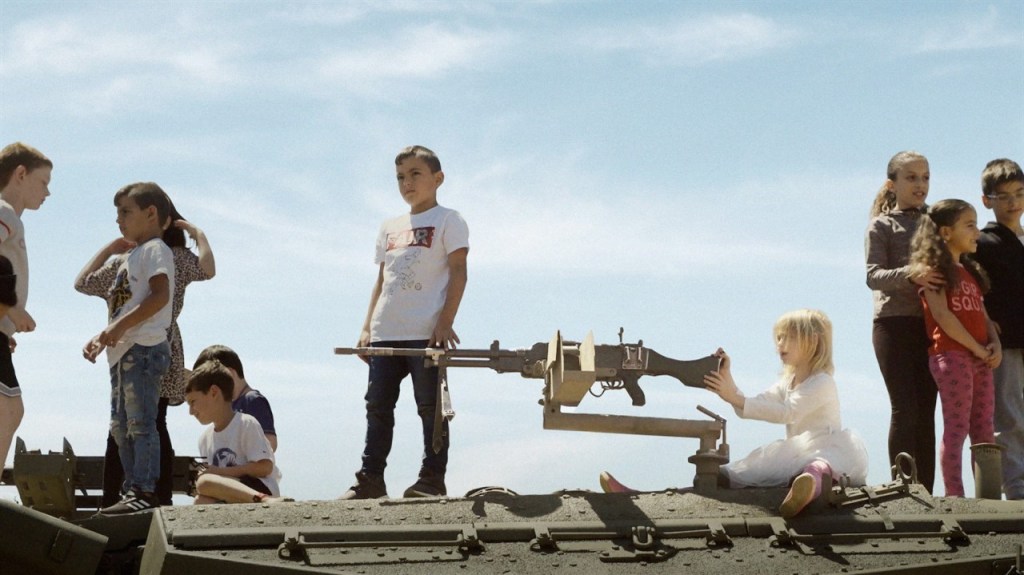
It is quite interesting that Davidi chose the title Innocence for his newest film, as the theme of innocence is brought up in Five Broken Cameras, where the narrator Emad Burnat is concerned with his son growing up and losing his childlike innocence through witnessing constant violence on the part of IDF. In Davidi’s newest film, he attributes innocence to the Israelis who are born into the militaristic and oppressive system. Of course, one can argue that the person does not always have to bring both perspectives into the discussion if they want to focus on a particular political issue. However, here the context is essential and is key to positioning the situation. Representing Israelis in the military service solely as victims, symbolically absolves them from any blame for their government’s actions. While there is value in addressing the militaristic and ideological context of Israel, specifically considering the current political situation in the world, it is as important to address why this context appeared in the first place. Innocence condemns the system of military service by invoking an emotion of sympathy and pity towards the soldiers, while at the same time erasing the Palestinian experience and struggle from the discussion. The condemnation of both occupation of Palestinian land, while simultaneously acknowledging the problematic politics of the militarized Israeli government towards its citizens has been done before by such organizations as B’Tselem. Therefore, Davidi’s work here rather functions as the justification for the continuous violence IDF has inflicted on the occupied territories, than a critical approach to the situation.
Behind the Sun – Dir. Bentley Brown (USA)

Multifaceted and expanding through different visual mediums, Bently Brown’s short film Behind the Sun explores the act of filmmaking. Formally, constructed as an essay about a relationship, the film industry and the city of Jeddah, at some points, Brown’s film is emotionally reminiscent of Godard’s 2 or 3 Things I Know about Her, mixing successfully how personal changes are often interlinked with the developments of society and the landscapes we inhabit. Behind the Sun’s scope might be daunting, especially when its duration does not seem to match the macroscopic notions the film is dealing with, however, it is a film that doesn’t hold back in its honesty and passion.
About Memory and Loss – Dir. Amélie Hardy (Canada)

Streamlined to almost perfection, Amélie Hardy’s documentary hit every beat with the same contagious rhythm. Every idea and frame is placed with care and intention as Hardy navigates with us in a hyper-fluid monologue about the importance of images. Images that can be real or that can be constructions of our subconscious, images that we consumed willingly and unwillingly, images that are part of the cultural zeitgeist and images that pertain to us, individually. About Memory and Loss ultimately is thought-provoking yet a refreshing look into our relationship with the medium.
The Butterfly Effect – Dir. Kelly O’Brien (Canada)

Love is a complex feeling to portray in a film, it could be asphyxiating or come up as artificial, sugar-coated, however, Kelly O’Brien is capable of encapsulating love in an 8-minute-long slice-of-life documentary that exudes warmth and tenderness. The Butterfly Effect’s modest form is complemented by the relationship O’Brien’s camera has with her family and vice versa. It takes understanding, patience and a whole lot of love, to capture people comfortably being themselves.
Black Barbie: A Documentary – Dir. Lagueira Davis (USA)

Combing through her presence across merchandise, media, and memory, Lagueira Davis’ debut film Black Barbie: A Documentary chronicles the history of the beloved toy Barbie, focusing on Black Barbie produced by and for the Black community with loving care and likeness to the first creators behind her existence and legacy. A leading lady, Black Barbie challenged beauty standards and representations of Blackness from the past to the present for younger generations to embrace and enjoy.
Donna Summer Love to Love You – Dir. Roger Ross Williams, Brooklyn Sudano (USA)

Using dreamy archival performance footage, home-video, broadcast snippets, and artworks, this mesmerizing portrait of disco queen Donna Summer examines the icon during her career in the 1970’s & 80’s while tugging onto the more private, vulnerable parts of her life navigating love, motherhood and the music industry. Love to Love You unfolds Donna Summer’s beginnings in the church to superstardom as the documentary celebrates her greatest musical achievements and paradoxes.
Invisible Beauty – Dir. Bethann Hardison, Frédéric Tcheng (USA)

Dedicated and resolute in her work, Bethann Hardison, model, agent, activist, and mother single-mindedly tackles racial inequities and dysfunction across the fashion industry while raising up a family and community throughout her lifetime. Invisible Beauty, simultaneously commenting on the hypervisibility/invisibility of Blackness in media representation, balances the historical, and socio-cultural contexts across five decades with the extensive, wide-reaching influence of Hardison’s career and service.
The Last Relic – Dir. Mariana Kaat (Estonia, Norway)
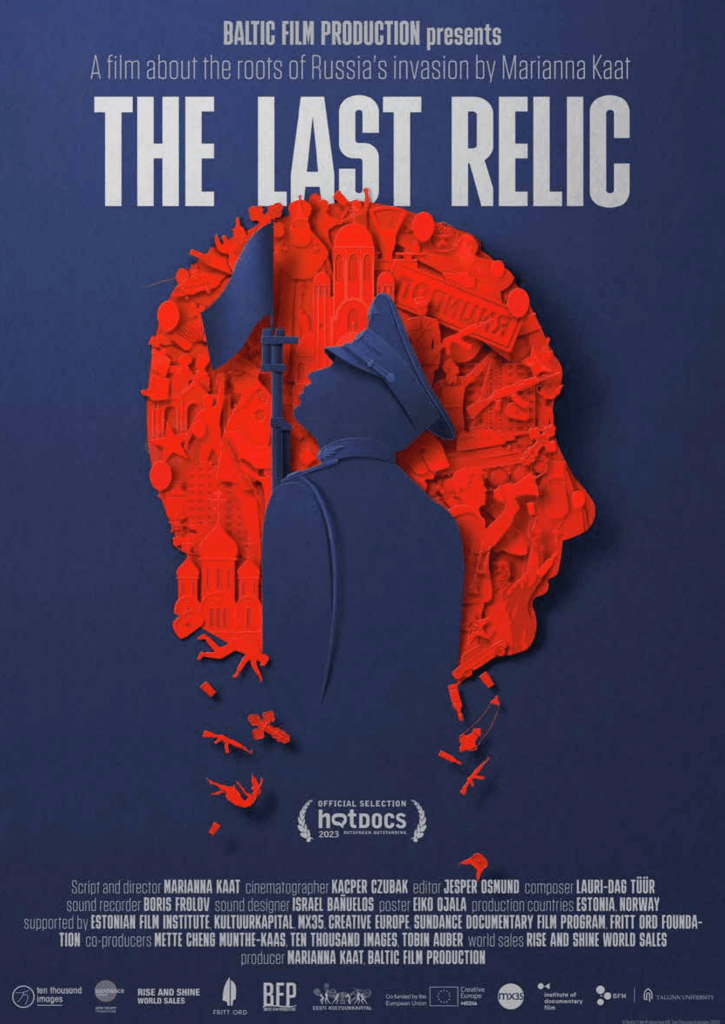
The documentary The Last Relic by Mariana Kaat explores the lives of the scattered opposition groups in the politically unique city of Yekaterinburg, located 1000 miles away from Moscow. The film follows several subjects as they navigate the city and discuss the potential solutions for the dismantling of the established dictatorship of Vladimir Putin. The filming of the documentary appears to have started in 2017, with a protest against the demolition of a TV tower, which gradually evolves into a long journey of getting to know the subjects, their ambitions, and involvement in the city and country’s political life.
There are essentially two main subjects in the film: Igor, a young man who alings himself with the Left Block and the Communist party, and more orthodox liberals Galina and Rafail, who through awkward, yet legal methods want to change the system from within. Early in the film, when the subjects are introduced, the debate between two ‘fractions’ occurs and outlines the fundamental differences in their thinking, that hinder any possibility for the collaboration. Rafail is insisting that financial stability would give people an incentive to change the government and rebel, constantly referencing the prosperity and level of life in the Western world, which almost becomes comical, as he attempts to indoctrinate every person he meets on the salary or pension in Finland. Igor, on the other hand, is more preoccupied with freeing the nation from oppression via mental transformation, as he argues, it does not matter who comes to power, the issues will eventually resurface because people’s minds remain stagnant. Both men outline essential issues in contemporary Russian society, yet their inability to communicate and understand each other hinders any possibility of agreement and unification.
Through exploring the political underworld, Kaat introduces the viewer to the subjects who invoke Eisensteinian ‘typages’: a rebellious Marxist student; an old-school politician; a dissatisfied cafeteria worker. These may appear as eccentric to foreign audiences, however, they all are quite recognizable types for the local viewer, (even though I doubt the film will ever make it into Russia.) I particularly want to draw attention to the two houseless men who engage in a heated political discussion about Vladimir Putin and his rise to power, operating the terminology almost on the same level as any of the other activists present in the film. Through an aesthetically balanced image, the film demonstrates both engagement and dissonance of the individuals in politics, perhaps deliberately avoiding the interviews of such important leaders as Yevgeny Roizman, former mayor of the city, political activist, and currently a political prisoner, even though he briefly appears in the film in the very beginning. Mariana Kaat does not engage with the well-known, nation-wise, names, yet chooses to address specific fractions that do not seem to go completely along with the dominant rhetoric of the opposition. The film puts an accent on the small scale of operation of these people, where their words never seem to get through to the public. Whether they are addressing the two older women at the parade, or the cafeteria worker, who in return only chastises the group for being all-talk. Whenever the activists try to address the public, they end up time hitting the invisible wall, where despite the grave financial and political situation, many still remain on the side of the government.
The film explains this reaction and loyalty to Putin’s regime through carefully constructed montage sequences. From the beginning, the city of Yekaterinburg is positioned as the place where the Imperial glory and Soviet past seem to co-exist not only architecturally but in the minds of people as well. The shots of miserable opposition protests are juxtaposed with the grand scale of the annual Cadet Ball, the competition of workers in power structures, and the showcasing of military potential at the Victory parade. While watching the soldiers and military vehicles pass by at the very end of the film, I could not stop thinking about how these tanks would soon be on Ukrainian land, killing civilians, and how many of the young men present in the film would take part in the criminal war. While the opposition talks about potential liberation from the regime and financial freedom in some near future, what is available to the public now is long-dead greatness that each year gets exhumated and paraded around the city, a token for the people to associate with. The government party, which combines the glorification and myth of the victorious past with the constant reminder of potential danger creates nationalistic pride in being Russian, solely because of one’s heritage. Perhaps the most picturesque shot that synthetizes the current political situation in Russia is the priest sitting next to the military commander and government official, observing how imperial values are showcased through dancing at the ball.
However, this approach should not be equated with an expression of pity or some form of victimization on the side of the Russian population. The director demonstrates how small the scale of the resistance is, against the immovable and solid nationalism of the government’s propaganda. The ending of the film, with a long shot lingering on the young boy holding a gun, as the military procession goes by foreshadows the ongoing war in Ukraine and the radical militarization of society, which would be enough of the statement to end the film. However, after the images fade out, the subjects of the documentary appear on the screen again, now with their biographies updated. Many of them, after denouncing war, either escaped the country or are now dealing with the consequences of speaking up. In the background For Ukraine composition is playing, with the words “God Save Ukraine” being repeated in the symbolic opposition to the God Save the Tsar which could be heard earlier in the film. As much as the film acknowledges the little opposition movement that still exists in Russia, it is critical of the stagnation and ignorance of the population, which has now led to the war and occupation of Ukraine.

 Short Ends