
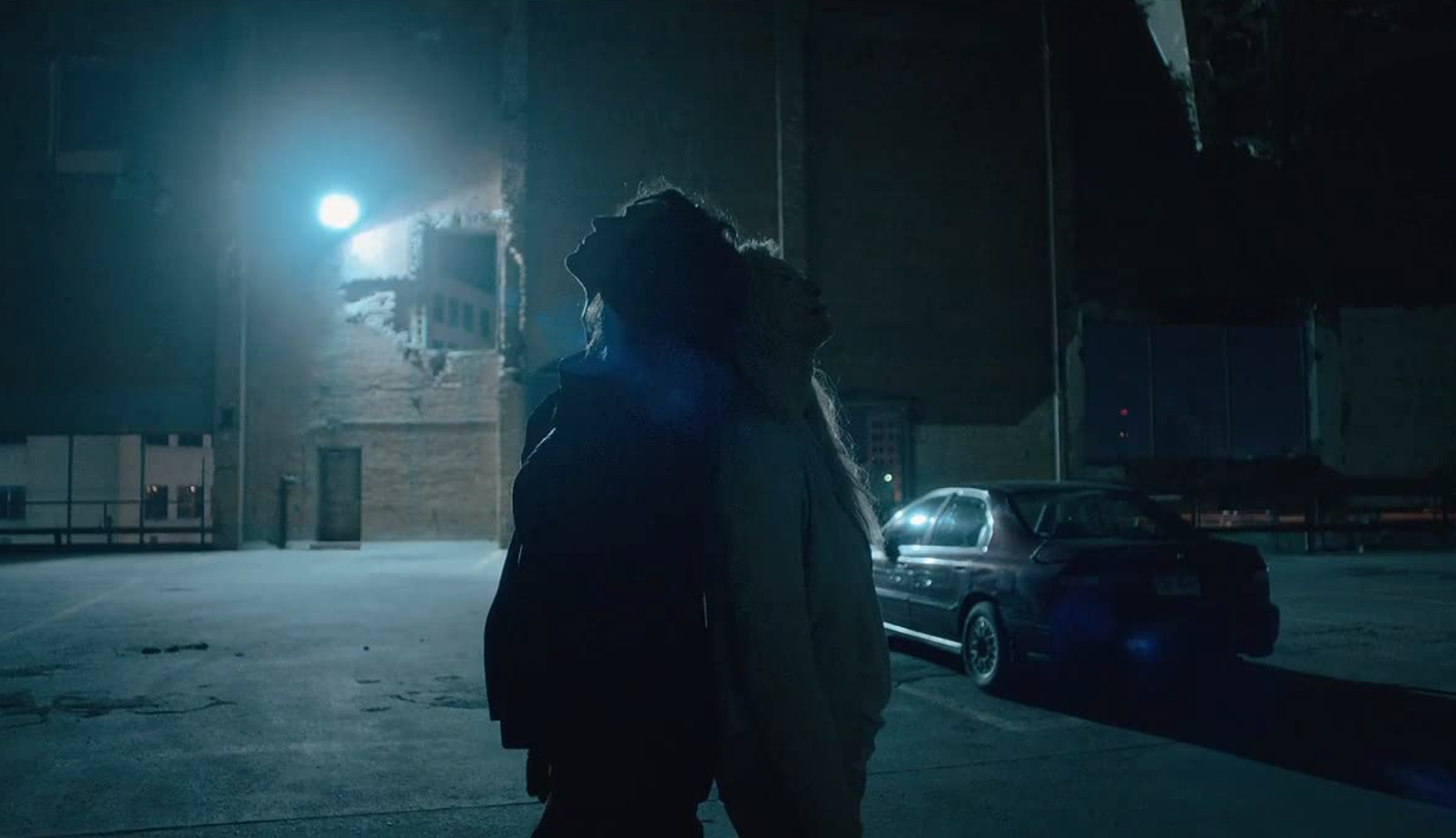
There’s a physics theory called ‘quantum entanglement’. At its most basic, quantum entanglement says that two particles can be linked, even across billions of light years. If a change is sparked in one, it affects the state of the other. These particles are intimately connected. What happens to one influences how the other acts. Is this connection by choice? Probably not, we’re talking about subatomic particles.
In the realm of human perception though, music choice has the extraordinary ability to intertwine with visuals, eliciting moods that wouldn’t exist, should the auditory-visual cord be cut. Think Hans Zimmer’s swelling Interstellar (2014, dir. Christopher Nolan) score inducing feelings of rocketing into space. Or the unsettlingly humorous juxtaposition of Gioachino Rossini’s “The Thieving Magpie (Overture)” with violence in the Flat Block Marina scene in A Clockwork Orange (1971, dir. Stanley Kubrick). The image attached to sound is crucial to setting the mood for a movie. Like subatomic particles, if one changes, the other would be altered as well. In Only Lovers Left Alive (2013, dir. Jim Jarmusch), music combines with location to orchestrate a prevailing atmosphere of loneliness and desolation demonstrated by the shadowy, mostly abandoned locales on the outskirts of society where the main characters exist.

Jarmusch’s film follows two centuries-old vampires, lovers Adam (Tom Hiddleston) and Eve (Tilda Swinton), as they brood about existence and devour all that the world has to offer in art, literature, science and music in each other’s arms. Adam, a hermetic composer attempting to live anonymously in a disintegrating Detroit mansion, mourns what humanity has become — superficial, barely living “zombies.” He composes what he describes as “funeral music”: pieces laden with pedal-heavy guitar conjuring a drone-like sound. Eve acts as a foil to Adam, endlessly curious and preferring to find beauty and hope in the world. She gently and adoringly says hello to animals and plants she comes across, calling them by their Latin names. In case their worldviews weren’t clues enough to the characters’ dichotomy, the costume design slaps you across the cheek. While Adam wears black clothes and has shaggy black hair falling in his eyes, Eve wears white with wild white hair that is often tied up or blown back from her face. At the beginning of the film, the two are separated with Adam in Detroit, Michigan and Eve in Tangier, Morocco. When she suspects Adam has become suicidal, Eve travels to Detroit.

I began watching Jarmusch’s movies as an angsty 22-year-old. Unemployed and fresh out of college, I felt adrift in my life. I spent hours a day driving aimlessly around the suburbs where my parents lived, smoking cigarettes on various beaches and considering myself a brooding Jarmusch-ian protagonist. Eye roll, I know. But out of all of Jarmusch’s movies, the Only Lovers score was the music I sought out to soundtrack my purposeless jaunts. The distorted guitar and march-like drumming paired well with my introspective moodiness. Like Adam, I wondered, “What’s the point?”
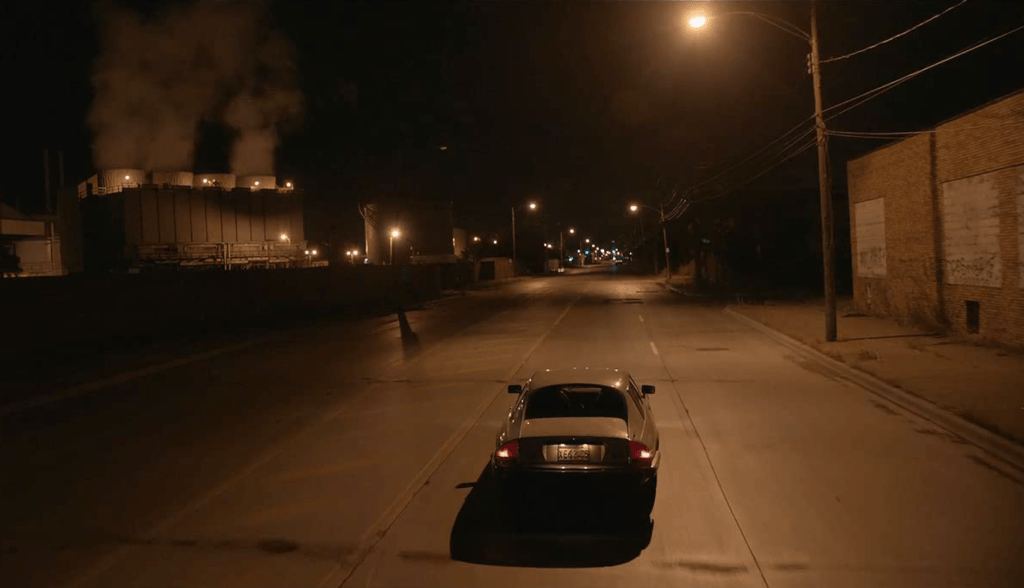
Jarmusch’s intentionality with his music choice — orchestrated by his own band SQÜRL — creates a beautiful synchronicity between what the audience sees and hears, eliciting that feeling of ambient loneliness I was seeking as I drove nowhere. In the opening scene, a rhythmically rotating overhead shot frames Adam and Eve in separate rooms laying on their backs with eyes closed. Wanda Jackson’s sultry “Funnel of Love” scores this scene. The shots of the vampires are juxtaposed with that of a record spinning on a turntable creating what is perhaps one of the most striking sequences of the movie. You feel totally enveloped by the music, as though you are the spinning record. What if the music were to be removed from this scene? You might just feel dizzy.
The precedent set by the entangled subatomic particles holds true. There’s a fandom for every piece of art, and each fan is affected differently by. A hallmark of fandom culture is making your own content based on the art. When it comes to Only Lovers… it’s a film about vampires in love. How could there not be a bounty of tributes to it? Venturing onto Youtube opens up a world of fan edits, each with their own meaning and voice. One video used a mash-up of Awolnation’s “Sail” and Seeed’s “You & I.” Another incorporated Christina Perri’s “A Thousand Years.” Yes, the song from Twilight: Breaking Dawn Part I (not all vampire movies are interchangeable!). Watching these edits, I felt the morbidity and broodiness of Only Lovers fade. When the original shoegaze-y soundtrack was swapped for an aging mainstream pop song, the movie became a boring romance lacking the depth and desolation that are so integral to its atmosphere. This was not my music of choice for those emo car rides.
Though altering Only Lovers’ accompanying music dramatically changes how one feels about what’s on screen, the creators’ music choice is nonetheless intentional. I may not like it, but I have to admit the YouTubers’ creative decisions illustrate just how interconnected the film’s music is with its visual components. Like subatomic particles, a change of state in one affects the other.
Works Cited
A Clockwork Orange. Directed by Stanley Kubrick, Warner Brothers, 1971.
Interstellar. Directed by Christopher Nolan, Paramount Pictures, 2014.
Only Lovers Left Alive. Directed by Jim Jarmusch, Record Picture Company, Pandora Film, 2013.
 Short Ends